Hospitality Brand Identity: How Design Makes It Real
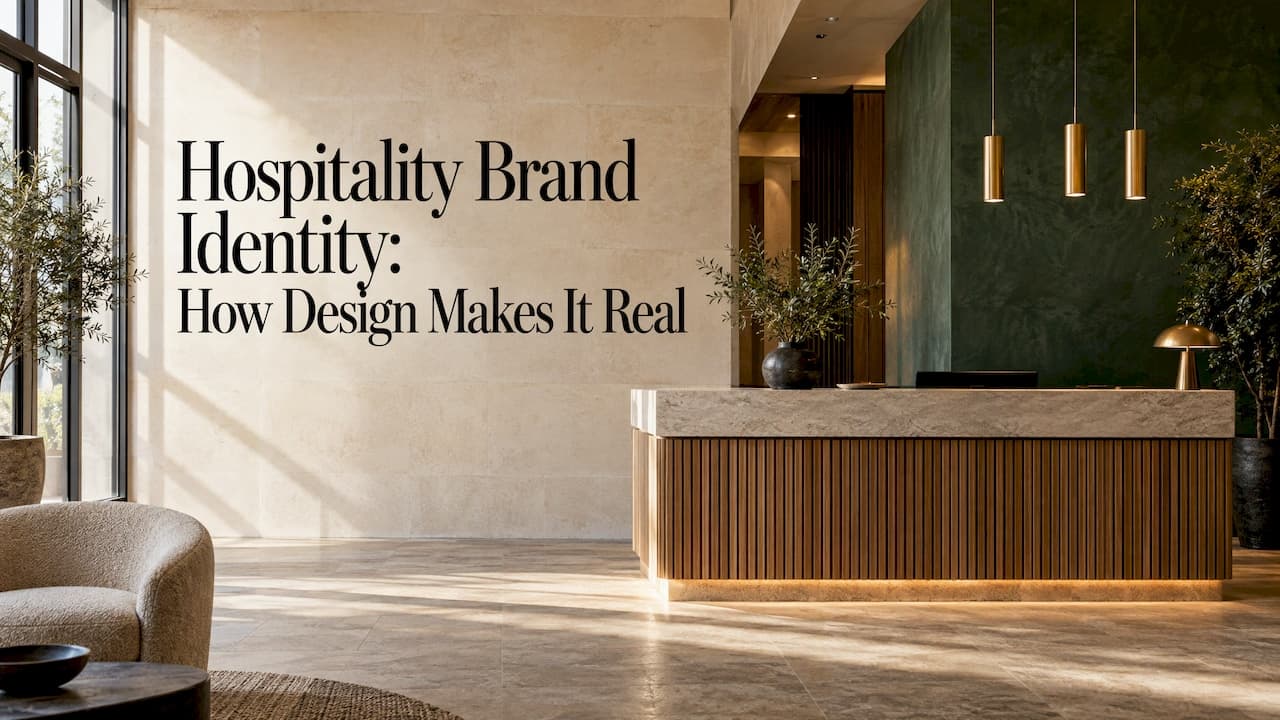
Hospitality brand identity is the personality a hotel, restaurant or resort projects to guests, and the space is where guests experience it most directly. A logo and a color palette matter, but guests judge you by what they see, touch, hear and smell once they walk in. The strongest identities start with a clear story and then carry it through layout, materials, lighting, furniture and service. This guide shows how to do that, whether you are opening a restaurant, repositioning a hotel or building a large mixed-use property.
TL;DR
- Brand identity in hospitality is the promise a property makes, plus every touchpoint that keeps it, from the website to the lobby to the bathroom amenities.
- Define the story and positioning first. Interior design then expresses them through materials, zoning, lighting and furniture.
- Aim for consistent ingredients and flexible recipes: venues in one property can feel different but should clearly belong together.
- Ground the design in place, such as the building, the neighborhood and local craft, rather than a generic mood board.
- Plan the identity through to drawings, procurement and site supervision, because that is where it is most often diluted.
Table of Contents
- What hospitality brand identity actually means
- Why the space carries so much of the brand
- Start with the story, then design the space
- The design elements that have to work together
- Consistent ingredients, flexible recipes
- Rooting identity in place
- Restaurants, hotels and commercial spaces: what changes
- Where brand identity gets lost between design and opening
- How we can help
- A checklist before you commit to a design direction
- FAQ
- Sources
What hospitality brand identity actually means
Brand identity is easy to mistake for a visual kit. In hospitality it is broader. [EHL Insights describes hotel branding] as the identity a property projects: the image it wants guests to associate with its name, and the experience it promises before anyone has booked. That identity has to stay consistent across website copy, color palette, typography, architecture, interior design and staff communication.
For restaurants the idea is the same. [OpenTable's restaurant guide] defines branding as defining and communicating who your restaurant is, including its personality, values and the experience guests can expect, across every touchpoint from signage and menu design to how staff greet guests.
A useful way to think about it is in three layers:
- Positioning: who you serve, what you stand for and what you refuse to be.
- Expression: name, logo, typography, tone of voice, photography.
- Experience: the physical space, the service rituals, the food, the sounds and scents.
Most branding projects spend their budget on layer two. Guests, however, spend their entire stay inside layer three. This is why interior design is not decoration applied after the brand is finished. It is where the brand is either delivered or lost.
Why the space carries so much of the brand
A hotel's design is,in the words of one industry voice quoted by [EHL Graduate School], its first handshake with guests. The same source stresses that every material choice, whether fabric, fixture or flooring, should speak to the brand's essence and still endure the pace of daily operations.
That double requirement is the real design challenge. A surface has to say something about who you are, and it has to survive luggage carts, cleaning cycles and a busy Friday service. Hospitality design is brand storytelling under operational constraints.
The space also works before guests consciously notice it. Entry sequence, ceiling height, the sound of the room, the warmth of the light at 8 p.m.: guests read these as signals of price level, formality and attention to detail. If the website promises relaxed luxury and the lobby feels like a corporate waiting room, the mismatch registers immediately, even when no one can say why.
Start with the story, then design the space
The most dependable sequence is story first,space second. [EHL Insights frames concept design] as a framework in which story, staff, space, identity, services, content and channels reinforce each other, with the story as the foundation that gives every other decision a reference point. One expert quoted there argues that interior design should come last in the space design process: the brief should settle the story, zoning and customer flow first, so designers can focus on bringing that story to life through furniture, textiles, materials and objects.
We agree with the principle, with one refinement: the designer should be in the room early, because zoning and flow are design decisions too. If a restaurant's story is about shared tables and open cooking, that has to be reflected in the floor plan before anyone chooses a fabric.
What a good brief contains
Before a designer draws anything, you should be able to answer these questions in a page or two:
- Who is the guest, and what is the occasion? A business traveler on a Tuesday and a couple on an anniversary want different rooms.
- What is the one idea the property is built around? Not a list of adjectives, a single idea.
- What should guests say to friends afterward?
- Which brand standards or operator requirements apply? If you are building under a franchise or management agreement,read [our guide to hotel brand standards] to see how to design inside them without losing character.
- What is the budget logic, and which spaces deserve the most investment?
If the brief is still fuzzy,[how to start designing a space before the brief is set] covers the thinking that comes before references and mood boards.
The design elements that have to work together
Identity lives in the details guests pass through in sequence. Here is how the main elements carry brand meaning.
| Element | What it communicates | Common failure |
|---|---|---|
| Layout and zoning | Hierarchy, pace, social energy | A plan copied from another property |
| Materials and finishes | Quality, craft, locality | Finishes chosen for catalog appeal, not story |
| Lighting | Mood, time of day, price level | One flat layer across every space |
| Furniture | Comfort, formality, how long guests stay | Pieces that photograph well but fail in use |
| Art and accessories | Personality and place | Generic decor bought in bulk |
| Sound and scent | Atmosphere you cannot photograph | Left to chance |
| Graphics and wayfinding | Tone of voice in physical form | Logo placed everywhere, character nowhere |
Layout and arrival
The lobby or entrance sets the first impression, and it is where the identity has to be most legible. For hotels,our [lobby design guide] covers layout, furniture and renovation choices. Corridors matter more than owners expect: they are where guests spend transitional time,and [our corridor design article] shows four choices that serve both guests and operations.
Rooms and details
The guest room is the most private expression of the brand and the one guests live in longest. Bed position, desk, storage, bathroom finishes and lighting all signal what kind of stay this is. We cover layout,interiors and the details that pay off in our [hotel room design guide].
Lighting
Lighting is the cheapest way to shift perception and one of the easiest to get wrong. Layered light, warm in the evening and functional where tasks happen,does more for atmosphere than most furniture budgets. See [hotel lighting design] for layers, specifications and lobby strategy.
Every touchpoint, not just the visible ones
EHL's concept design research notes that a hotel's identity spans every sensory and visual touchpoint,[from website design to scent], and must stay consistent with the story to build recognition and perceived value. It even points out that something as minor as the choice of toilet paper can change how a brand is perceived.
That chain also extends online. A guest forms an expectation from your pages and listings before arriving, and the room has to match it. The way listing clarity and conversion work together is a good reminder that what you show and say before the stay should line up with what guests find at check-in.
Consistent ingredients, flexible recipes
One property often holds several moods: a lobby, a restaurant, a spa, a rooftop bar. The brand question is how much they should resemble each other. Too much sameness feels corporate. Too little feels like several unrelated businesses.
A workable rule is to fix the ingredients and vary the recipes. Ingredients are the things that appear everywhere: a signature material, a color family, a proportion, a way of lighting, a craft tradition. Recipes are how each venue combines them. A spa can be quieter and softer than a bar, and a fine-dining room need not behave like a clubhouse, yet a guest should sense the same hand behind both.
A practical method:
- Pick three to five ingredients that come directly from the story.
- Decide which are mandatory in every space and which are optional.
- Give each venue one distinct element that belongs only to it.
- Review every venue against the shared list before drawings are issued.
This is also how large mixed-use and resort projects stay coherent when several teams work in parallel. For a rooftop venue, for example,[rooftop bar design choices] around layout, lighting and materials can express a distinct mood while still belonging to the property.
Rooting identity in place
Generic luxury is the fastest route to forgettable. The identities guests remember tend to come from somewhere specific: the building's history, the street, the local craft, the climate, the way people in that city actually eat and gather. That specificity also protects you from competitors who can copy a style but not a context.
In practice, this means asking:
- What is unusual about this building? Ceiling heights, structure, original openings and views are free character.
- Which local materials, makers or traditions can be used without turning into a theme?
- What does the neighborhood do at different hours, and should the space respond?
- Which clichés of this destination should be avoided?
Local reference works best with restraint. A single well-chosen material or craft, used with conviction, reads as authentic. A dozen references reads as a theme park. For a sense of how place and mood come together in a destination project,see our [Esperanza Resort in Vilnius], and for a restaurant example,our [LACAL-A restaurant interior in Vienna]. Boutique properties lean on this approach most heavily,and our [boutique hotel design principles] go deeper.
Restaurants, hotels and commercial spaces: what changes
The logic is shared, but the emphasis shifts.
Restaurants compress the brand into one room and a few hours. The menu, the plating, the uniforms, the music and the lighting are experienced together, so the interior has to support a clear occasion: quick lunch, long dinner, celebration. Seating mix, acoustics and light levels shape how long guests stay and how much they spend, and they should be planned together with the concept.
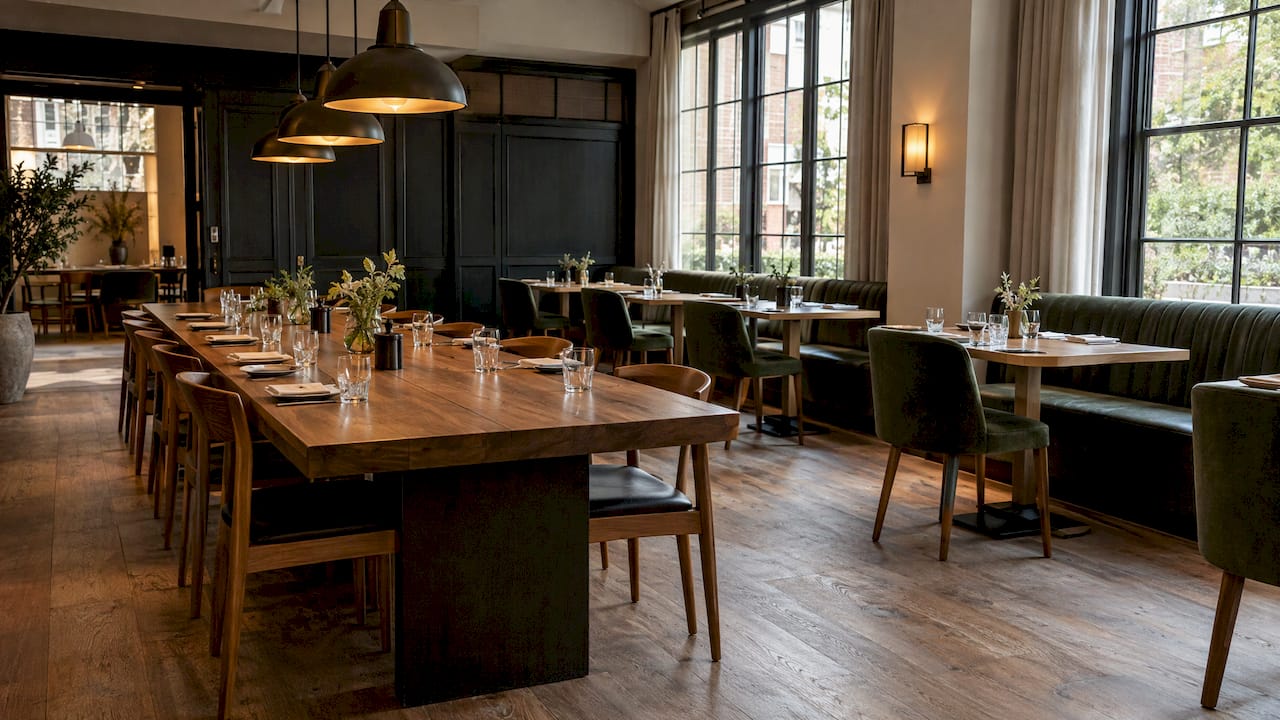
Hotels spread the brand over a longer stay and many spaces. Consistency and wayfinding matter more, as does durability: finishes are tested daily for years. Operator standards often set the baseline, with design adding the local and distinctive layer on top.
Large commercial and mixed-use environments have to hold several tenants, audiences and uses under one idea. Here the brand often works as a framework of ingredients, allowing each venue its own recipe.
Where brand identity gets lost between design and opening
A strong concept can be diluted at every stage after approval. Drawings leave out a junction detail, a substitution replaces the chosen stone, a supplier delivers a near-match, a lighting fixture is swapped for lead-time reasons. Each change looks small. Together they turn a distinctive space into an average one.
The defense is process:
- Concept and visualization. Approve the idea in images before money is spent on construction. Realistic renders let owners and operators react to mood, proportion and light.
2. Execution drawings. Translate the concept into precise technical documentation so contractors build what was designed. Our note on [construction drawings that cut rework] explains why this stage protects both quality and budget. - Furniture, materials and accessories. Specify and source with the brand criteria in hand, so every substitution can be judged against the story.
- Site and supplier follow-up. Check what is delivered and installed against what was approved.
The opposite view deserves a mention: one branding practice argues that food, service and ambiance are the things guests tell friends about,and that [clarity on what you stand for] should come before interior design and visual identity. We agree on the sequence. It is a reason to treat the space as part of the brand, not as packaging.
Our perspective
We design only for hospitality and commercial spaces, and that focus shapes how we see brand identity. We do not treat it as a visual layer that arrives after the architecture. For us the identity is the reason every decision exists: why the entrance opens the way it does, why one material runs through three venues, why the bar is lit the way it is.
Our work is built around bespoke solutions that fit the client and the context, because a hospitality brand that borrows another brand's look rarely earns its own recognition. We start from the client's story and the guest experience it promises, then test every layout, finish and furniture piece against it.
We also believe the identity has to be protected beyond the concept. That is why our scope runs from preliminary design and visualization through execution drawings, furniture and materials selection, and site and supplier follow-up. One team carrying the idea from first sketch to opening is the best way we know to keep it intact.
slava
How we can help
BOOM Project is an international interior design studio for restaurants, hotels and large commercial spaces. If you already have a story or positioning, we translate it into a space: concept development,[3D interior visualization], execution drawings, furniture and materials selection, and supplier and site follow-up.
If the idea is still forming,our [preliminary design service] is the place to begin,and you can see the full scope on our [services page]. Pricing is project-based, so tell us about the property and we will scope it with you.
A checklist before you commit to a design direction
Use these questions to test any concept, ours or anyone's, before it is approved:
- Can the owner and the operator state the core idea in one sentence, and does the concept show it?
- Does every major space have a clear role in the guest journey?
- Which ingredients repeat across venues, and which are unique to each?
- Are materials chosen for story and for daily wear?
- Does the lighting plan have layers for morning, evening and tasks?
- Do the website, photography and signage match the physical experience?
- Is there a named person responsible for checking substitutions against the concept?
If several answers are "not yet", resolve them before drawings begin, when changes cost the least.
FAQ
What is hospitality brand identity?
It is the personality and promise of a hotel, restaurant or resort, expressed through everything guests encounter. That includes name, logo and tone of voice, but also architecture, interiors, service and the digital experience. The goal is for every touchpoint to tell the same story.
How does interior design affect hotel branding?
Interior design is where guests physically experience the brand. Layout, materials, lighting and furniture signal price level, mood and character before any words are read. When the interior matches the promise made online and in marketing, the brand feels credible and memorable.
Should the brand identity come before the interior design?
Yes, at least the core story and positioning. Once you know who the guest is and what the property stands for, the designer has a clear reference for every decision. Working with the designer early on zoning and flow helps the story become spatial rather than decorative.
How do you keep several venues in one property consistent?
Fix a short list of shared ingredients, such as a signature material, color family or lighting approach, and let each venue combine them differently. Give each space one element that is its own. Review every venue against the shared list before technical drawings are issued.
Can a hotel under a franchise still have a distinctive identity?
Yes. Brand standards usually set the baseline for things like room sizes, fixtures and signage,and local character is added in the spaces and details where flexibility exists. Our guide to [hotel brand standards] explains how to design within them.
Sources
- Hotel Group Branding: Insights, Ideas & Examples,[EHL Insights]
- Hotel Interior Design: Creating Spaces That Work Smarter,[EHL]
- 7 Pillars of Hotel & Restaurant Concept Design,[EHL Insights]
- Restaurant Branding Strategies to Win Guest Loyalty,[OpenTable]
- Hotel branding matters. Just not the way you think.,[Ragged Edge]