Hotel Brand Standards: What They Cover and How to Design Within Them
Hotel brand standards are the written requirements a hotel company sets for how every property under its flag looks, operates and serves guests. For an owner or developer, the part that matters most is design: room sizes, finishes, lighting, furniture, public spaces and signage are all written down, reviewed and audited. This guide explains what the standards contain, how compliance works, and how to build a property that feels like its own place while still passing brand review.
TL;DR
- Brand standards are contractual for franchised and managed hotels. Breaching them can count as a default under the franchise or management agreement.
- Design standards typically fix the built environment: room dimensions, lighting, bathroom fixtures, furniture specifications and approved finishes.
- Brands keep the right to change standards over time, and exceptions are granted at the brand's sole discretion, so get them in writing before you build.
- Distinctiveness lives in the space the standards leave open: local context, public areas, food and beverage outlets, art and layout details.
- Bring a designer in before the design is drawn, and make sure drawings, FF&E and site follow-up trace back to the manual.
Table of Contents
- What hotel brand standards are
- What brand standards govern
- How compliance works
- When your design conflicts with the manual
- Staying distinctive inside the standards
- Our perspective
- Where a designer fits in the process
- Common mistakes
- FAQ
- Sources
What hotel brand standards are
Brand standards are a set of guidelines and requirements that define a chain's identity, character and service levels. Their job is consistency across properties, along with operational efficiency,[guest trust and loyalty]. A guest who books a brand in a city they have never visited is buying a predictable promise, and the standards are how that promise is enforced.
Industry voices describe them in practical terms. Crescent Hotels & Resorts' Caroline Dyal presents them as [a blueprint for service] that provides the consistency that differentiates a hotel. Writing for ETHospitalityWorld,Pankaj Giroti notes that [standards let guests choose a hotel with confidence] and help operators identify and close service gaps.
Two terms are easy to confuse. Brand guidelines usually mean the marketing side: logo use, colors, tone of voice and photography. Brand standards are broader and binding: they include the physical product and the operating procedures. The design guidelines a hotel owner searches for are one chapter of the standards, usually tied to a design manual and approved vendor lists.
What brand standards govern
Standards commonly cover [four areas]: physical and design elements, operational and housekeeping procedures, service and staff protocols such as uniforms and grooming, and technology infrastructure. For design teams, the first and last matter most, and they are more detailed than many owners expect.
The physical product
Physical and design standards are the non-negotiable part. They [specify the built environment]: room dimensions, lighting levels, bathroom fixtures, furniture specifications and approved material finishes.
A law firm that advises on hotel development lists the typical scope: guestroom and lobby configuration and finishes, lighting fixtures, air-conditioning and window requirements, amenities, pools, spas, restaurants, FF&E,[and technology hardware and software]. Their advice to owners is to write brand standards into architect and design-professional responsibilities from the earliest stage of a project, not after the drawings exist.
A published example shows the breadth. Sonesta's franchise standards cover guest rooms and bathrooms, restaurants and bars, meeting space, gyms, technology (televisions, Wi-Fi, PMS/POS, electronic locks), signage,[amenities and loyalty touchpoints].
How a brand translates into design decisions
Good standards do not only list dimensions. They describe how each space should feel and then fix the materials that deliver it.
A Marriott design standards document shows the logic. Public-space guidance coordinates floors, walls, ceilings, millwork, details, furnishings, color and durability. Guestrooms are described as places for working, grooming, relaxing, refreshment and sleeping, with a comfortable residential feel. The same document covers casegoods, soft goods, blackout-lined window treatments with decorative sheers, and artwork. Importantly,it also says projects should [embrace regional context while maintaining the brand].
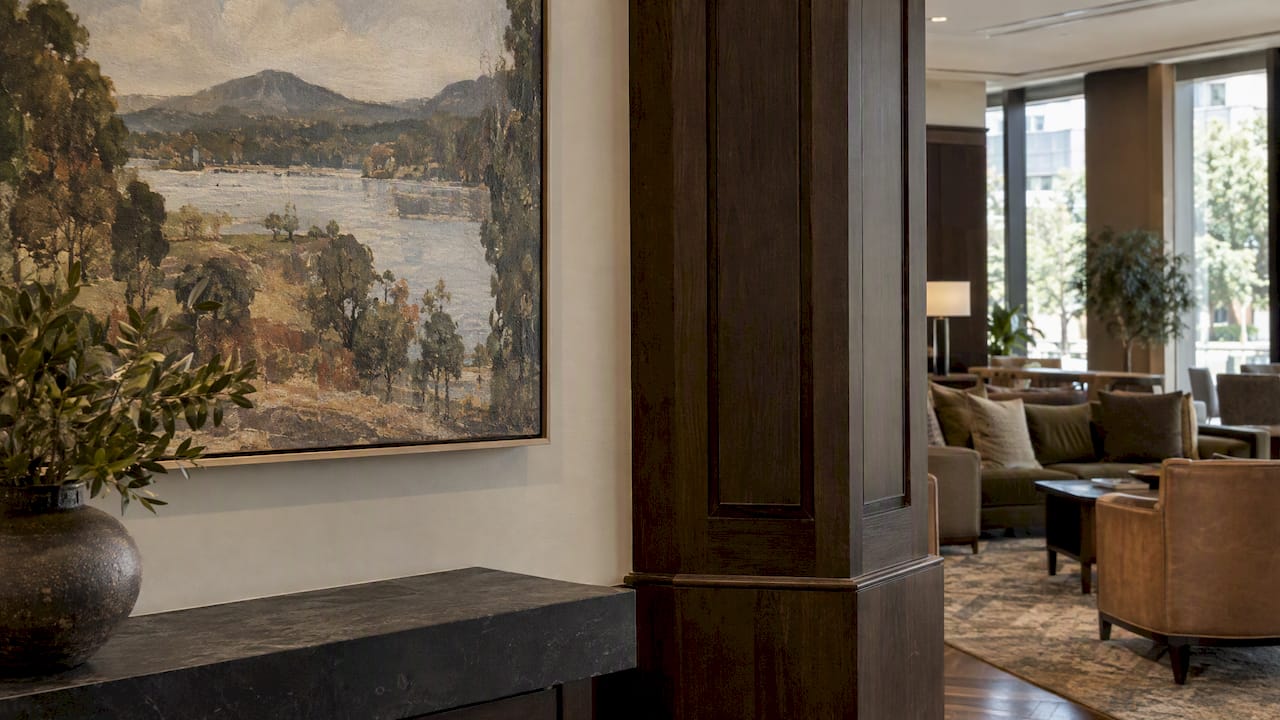
A Moxy brand overview works the same way for a lifestyle product: public-space standards cover the same elements, guestroom guidance centers on relaxing, sleeping and a durable, technology-enabled atmosphere,and [lighting is specified to move from day to night through dimming].
So a standard moves from brand idea to specification in three steps:
- Promise: what the guest should feel (residential, energetic, calm).
- Spaces: what each room is for and how it is zoned.
- Specification: the materials, lighting levels, fixtures and furniture that make the feeling repeatable and durable.
A designer who reads a manual only for step 3 misses where the flexibility is. Step 1 explains why a rule exists, and that is usually what you need when you ask for an exception.
The guest journey beyond the interior
Brand standards also reach past the built environment. Hotelier Magazine's view is that a brand is [experienced through the whole customer journey], so services and amenities must reinforce the same promise as the space. That is why events and activations in branded properties,like the [JW Marriott Turnberry brand activation], sit inside the same brand frame as the architecture and interiors around them.
How compliance works
For franchised hotels, adherence to the standards manual is contractually required,and [violations can constitute a default of the franchise or management agreement]. That is the reason owners treat design review as a financial matter, not a style discussion.
Brands check in several ways. Compliance is monitored through in-person and virtual property visits,[quarterly brand-standard audits and designated brand performance leaders]. Between audits, the design phase has its own gates: concept review, drawing review and often a pre-opening inspection.
Two features of the contract catch owners off guard:
- Standards move. The franchisor keeps the right to modify standards over time, and owners must comply with updates as if they were part of the original agreement ([Tru by Hilton]; [Sonesta]). A specification that passes today may have a different requirement at renovation time.
- Standards are negotiated collectively. Many companies, including Wyndham,use [Franchise Advisory Councils to review the ROI of proposed standards]. Wyndham's Scott LePage has said that [owner payoff and practicality] are central when standards are designed, so that investments connect to guest expectations.
A practical compliance checklist for the design phase
- Get the current manual and the approved vendor lists in writing before concept work starts.
- Map every standard that touches the interior: dimensions, finishes, FF&E, lighting, signage, technology.
- Mark each item as fixed, flexible or unclear. Ask the brand about the unclear ones early.
- Tie each drawing sheet and each FF&E line to the standard it satisfies.
- Keep dated records of approvals, so a later manual revision does not reopen settled decisions.
When your design conflicts with the manual
Conflicts happen: a historic building has a column in the wrong place, a local code limits a layout,or a standard room size does not fit the floor plate. The rule to remember is that the franchisor holds [sole and absolute discretion to grant exceptions]. One published manual also notes that a policy from its resources need not be adopted if the hotel adopts its own policy on the same subject that meets all legal requirements. That covers policies, not physical specifications, so do not assume it frees a design choice.
What works in practice:
- Raise it early. An exception request attached to a concept is easier to grant than one found at inspection.
- Propose, don't just object. Show the alternative layout or material, with a visual, and explain which purpose of the standard it still meets.
- Frame it as the brand's own principle. Marriott's own language about regional context is a good example: brands expect some local response.
- Get the answer in writing and file it with the drawings.
This is where 3D visualization earns its cost. A brand reviewer can approve what they can see. A rendered corridor or guestroom with the exact finishes lets them judge the departure in seconds, rather than reading a paragraph of justification.
Staying distinctive inside the standards
Standards fix a floor, not a ceiling. hihotels, for instance, lets franchisees customize designs,[amenities and experiences to local market demands]while keeping base-level standards. Sonesta's standards go as far as [recommending other outlets based on hotel size and positioning], leaving room for the owner to decide what they are.
The places where distinctiveness usually fits:
- Food and beverage. Where the manual recommends rather than prescribes an outlet, concept, layout and materials can be local.
- Public and transitional spaces. Lobbies, lounges and circulation carry the brand, but the manual often leaves proportion, art and lighting mood to the project.
- Local narrative. Materials, crafts and artwork that reference the city, within the approved palette and durability requirements.
- Back-of-house detail that guests feel. Our notes on [hotel corridor design],[hotel bathroom design]and [flexible meeting rooms] show how much can be decided inside a standard.
Owners should also budget for it. Standards are specified down to furniture and finishes,so FF&E is where compliance cost concentrates; our guide to [FF&E budgeting for hotel owners] explains the gap between catalog price and installed cost.
Our perspective
We design hospitality interiors, and the most common mistake we see is treating brand standards as a checklist handed over after the concept is done. By then the layout has hardened, and every conflict becomes an expensive negotiation.
Our approach is to read the manual as a design brief with two layers. The first layer is fixed: dimensions, fixtures, technology, safety. The second is the intent behind it: what the brand wants a guest to feel in each room. We design to the intent and prove compliance on the fixed layer. That order keeps a property from looking like a copy of the prototype.
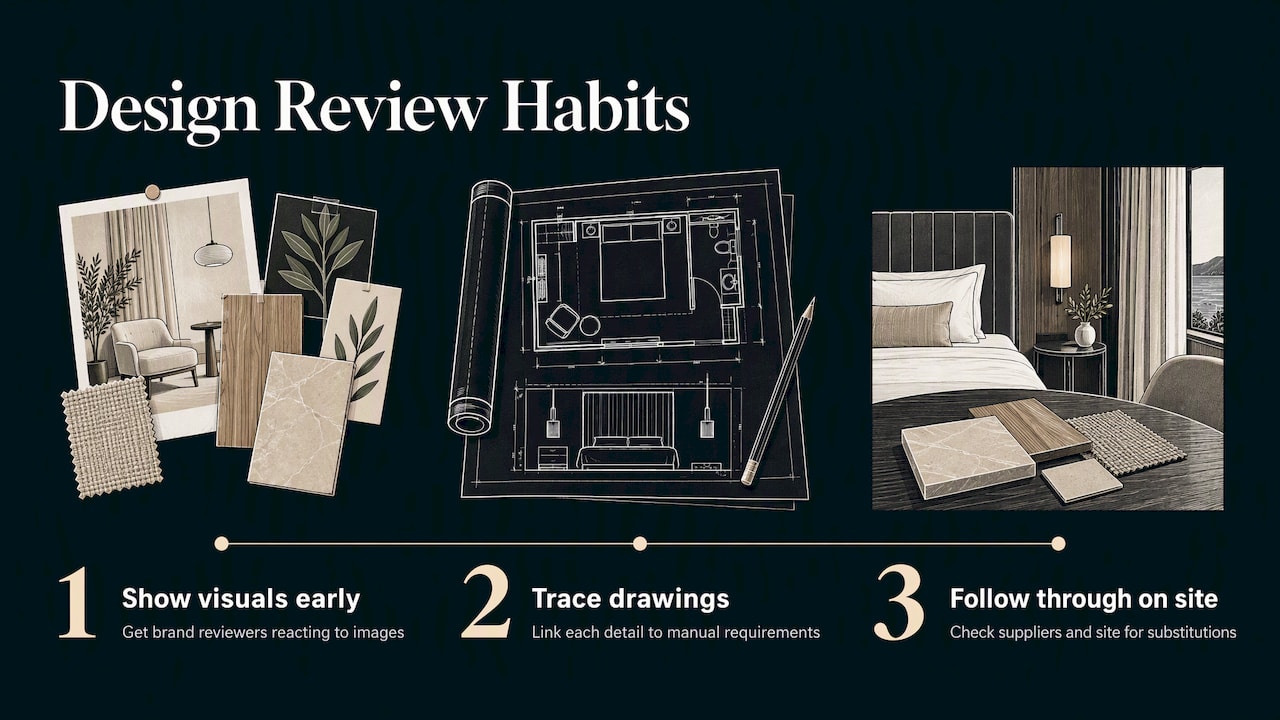
Three habits follow from it. We make visual material early, so brand reviewers react to images, not text. We keep execution drawings traceable to the manual, so a reviewer can find the requirement behind each detail; fast,[clear construction drawings] reduce rework on site. And we follow the project through suppliers and site, because a compliant drawing can still become a non-compliant room if a substitute material slips in.
What we cannot do is read a brand contract for you. Your franchise or management agreement and your lawyer decide what is binding; our job is the design that works inside it.
— slava
Where a designer fits in the process
For a branded hotel, design support is most useful when it runs through the full chain, with one team keeping the brand logic from concept to installation.
- **Concept:** [Preliminary design] turns the manual's intent and your local context into layouts and a mood that a brand can review.
- **Review:** [3D interior visualization] shows finishes, lighting and proportions before anyone commits to purchase.
- **Documentation:** [Execution drawings] carry the specifications contractors build from.
- Procurement: Furniture,[materials and accessories] selection keeps FF&E on the approved list. Upholstery is a good example:see why [commercial upholstery fabrics] need more than a rub-count test.
- **Delivery:** [Site and supplier follow-up] checks that what arrives is what was approved.
If you are planning a new hotel, a conversion or a renovation and want a studio that designs to your brand's rules without losing your property's character,see [our hospitality design services] and tell us about your project.
Common mistakes
Designing first, reading the manual later. The cost shows up as redrawn plans and re-ordered furniture.
Assuming the manual is static. The franchisor can change it, and you must follow the changes, so date every approval.
Relying on verbal exceptions. Because the brand alone decides, an oral "that should be fine" protects no one.
Copying the prototype. Brands often invite regional context, so a property that ignores its city misses an opportunity the manual allows.
Ignoring the operational layer. Design standards sit beside service and technology standards. A beautiful guestroom that cannot host the required technology still fails review.
FAQ
What is the difference between hotel brand standards and brand guidelines?
Brand guidelines normally cover identity: logo, colors, voice and imagery. Brand standards are wider and contractual for franchised and managed hotels, and include the physical product, operating procedures, service protocols and technology. Design guidelines are the part of the standards that describe the built environment.
What happens if a hotel does not comply with brand standards?
In franchised and managed hotels, adherence to the manual is a contract term, and violations can constitute a default under the agreement. Brands monitor compliance through property visits and quarterly audits. Your franchise agreement sets the exact remedies, so ask your lawyer what applies to you.
Can a hotel get an exception to a brand standard?
Yes, but only at the brand's discretion. Published manuals state that the franchisor has sole and absolute discretion over exceptions. Request one early, with a visual alternative, and keep the approval in writing.
Do brand standards change over time?
They do. Franchisors reserve the right to modify standards, and owners must follow updates as though they were in the original agreement. Plan renovation cycles and FF&E purchases with that in mind, and confirm the current manual before ordering.
Sources
- A Quick Guide to Hotel Brand Standards,[Mitti]
- Adhere to brand standards, Hotel Management,[July/August 2024]
- Hotel / Resort brand standards and their significance,[ETHospitalityWorld]
- Hotel Brand Standards: Multi-Property Compliance Guide,[Matterport]
- Protecting Hotel Brand Standards With Architect Agreements,[Akerman LLP]
- [Sonesta Design & Construction brand standards]
- [Marriott brand design standards overview] - Moxy brand overview,[interior design]
- Operators are re-focusing their branding efforts,[Hotelier Magazine]
- Tru by Hilton brand standards,[North America]
- [Wyndham brand standards article]