Commercial Upholstery Fabrics: 30,000 Rubs Won’t Prove Cleanability
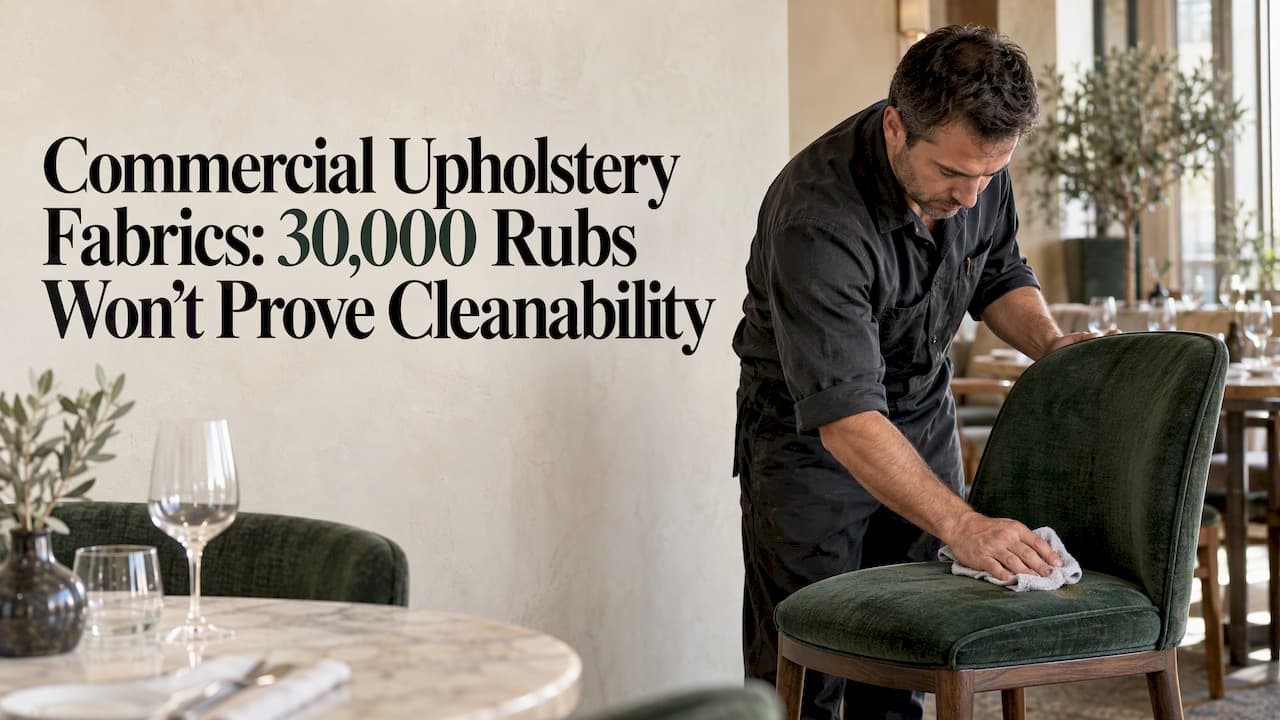
For high-traffic hospitality and public interiors, specify performance woven blends, solution-dyed synthetics, or coated fabrics where moisture and stains matter. Require at least 30,[000 Wyzenbeek double rubs for high-traffic woven upholstery], and some coated fabrics may be specified at 50,000 double rubs. The caveat that matters most: abrasion alone proves little, so confirm cleaner compatibility and the other physical tests.
TL;DR:
- High traffic woven upholstery should meet at least 30,000 Wyzenbeek double rubs; low traffic private spaces can use 15,000 double rubs or 20,000 Martindale cycles.
- Because Wyzenbeek and Martindale use different motions, compare results only within each method and also check pilling, breaking strength, seam slippage, and tear data.
- Choose coated upholstery for dining or healthcare spills, but verify cleaner compatibility because harsh cleaning products can irreversibly damage the fabric.
- Synthetics colored through the fiber resist fading in sunny outdoor settings, while knits, velvets, and specialty textures suit lower use pieces.
- Test samples with the facility’s cleaners at working dilution and dwell time, set pass or fail criteria first, and list approved products in the contract.
Table of Contents
- What do Wyzenbeek, Martindale and other lab tests actually measure?
- Which fabric constructions suit which commercial spaces?
- How do you verify a fabric survives your cleaning protocol?
- What belongs on a specification checklist?
- How should you plan maintenance and replacement?
- Why we balance durability with hospitality design
- How we support material selection and supplier follow-up
- FAQ
- Sources
What do Wyzenbeek, Martindale and other lab tests actually measure?
Wyzenbeek (ASTM D4157) rubs a fabric back and forth and counts double rubs. Martindale (ASTM D4966) rubs the sample in an elliptical motion and counts cycles. Because the motions differ, the two results are not directly comparable, so ask which method a supplier used before you compare numbers.
ACT sets the floor for low-traffic private spaces at 15,000 Wyzenbeek double rubs or 20,000 Martindale cycles, while high-traffic woven upholstery moves up to 30,000 double rubs. Treat these as minimums, not predictions of service life.
Beyond abrasion, ACT also requires woven upholstery to meet other physical minimums:
- Pilling: Class 3 or better (ASTM D3511 or ASTM D4970)
- Breaking strength: 50 lbs in both warp and weft (ASTM D5034)
- Seam slippage: 25 lbs in both directions (ASTM D4034)
- Tear strength (ASTM D2261) and coated-fabric adhesion (ASTM D751) belong in the same review
For flammability, ACT's guidance lists the California TB 117-2013 Section 1 test and ASTM E84 tunnel classifications, and which one applies depends on jurisdiction and sprinkle red status. Confirm local code and NFPA requirements with the authority having jurisdiction before you sign off.
Which fabric constructions suit which commercial spaces?
Match construction to the job the seat does. A guest room chair and a restaurant booth fail in very different ways.
- Woven performance blends: Strong choice for guest rooms and lounges, where you want aesthetic range and moderate wear. Hold them to the 30,000 double-rub threshold wherever traffic is heavy.
- Coated, vinyl and polyurethane: Best for booths, dining seating and healthcare, where spills and sanitizing are routine. For similar high-traffic settings, ACT notes coated upholstery may be specified to 50,000 double rubs. Their weak point is chemistry, covered in the next section.
- Solution-dyed synthetics (polyester, olefin): Color runs through the fiber, so they resist fading under strong light and suit sunrooms, terraces and outdoor upholstery fabrics.
- Knits, velvets and specialty textures: Pile crushes, snags catch, and knits stretch. Reserve them for lower-use pieces, or reinforce them with tighter seat construction and sensible placement away from belts, bags and buckles.
Performance-treated textile systems may offer stain and liquid resistance, and may be an option for busy rooms. Still ask for the same test data you would demand from any other fabric.
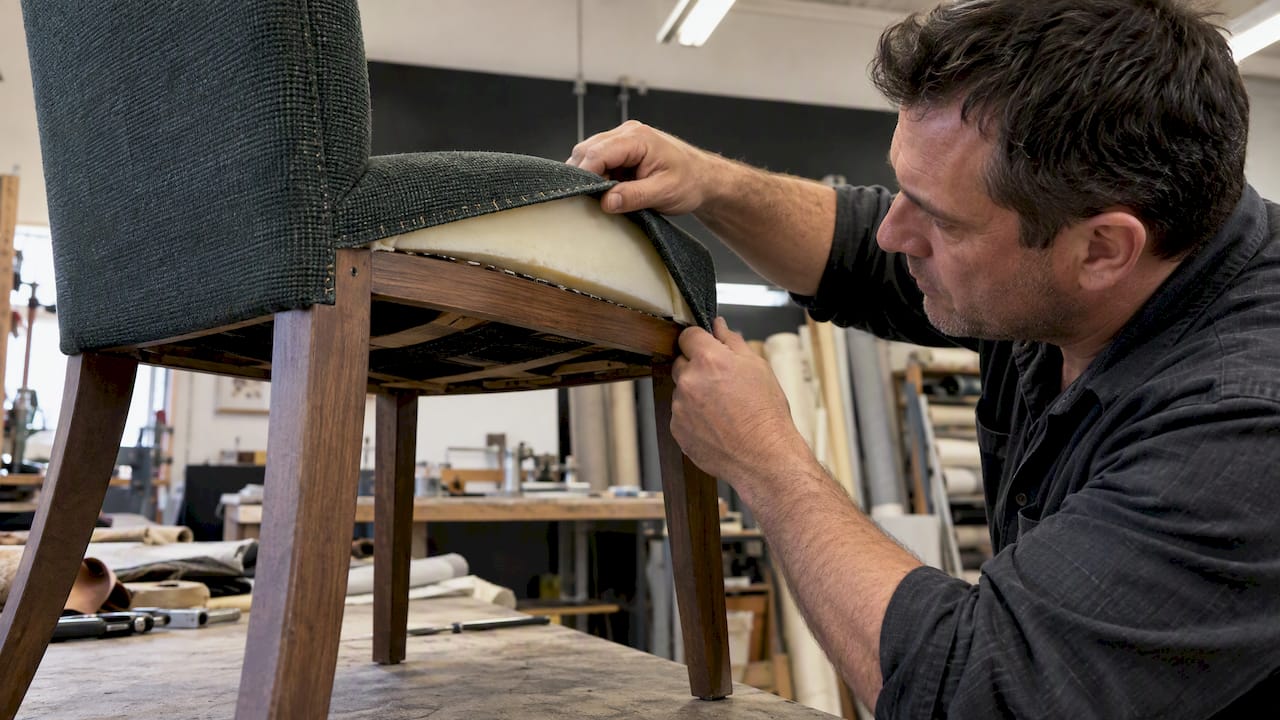
Pro Tip: Furniture construction affects results as much as the cover. Stretch and set depend on the frame, foam and tailoring, so review the upholstered piece, not only the cloth.
How do you verify a fabric survives your cleaning protocol?
Chemical damage is a common and avoidable cause of early failure. [Practitioners warn that hard-surface cleaners can irreversibly damage coated fabrics], and ACT recommends confirming compatibility through supplier Product Technical Bulletins and field tests with the facility's own protocols. Lab tests cannot reproduce every disinfectant your staff will use, which is why a field test matters.
- Request the Product Technical Bulletin and the supplier's approved-cleaner list.
- Collect the products your staff actually use, at real dilution and real dwell time.
- Apply them repeatedly to sample swatches, following ACT's testing guide for on-site validation with defined duration and acceptance criteria.
- Inspect for cracking, peeling, tackiness, surface dulling and discoloration.
- Record results and attach them to the procurement file.
Rinse or neutralize residues as the supplier directs, since leftover chemicals keep working on the surface. Write the approved cleaners, dilutions and dwell times into the contract so the operator and the supplier share the same instructions.
Pro Tip: Test on cut edges and seams too. Chemicals often attack coated fabrics where the surface is already stressed.
What belongs on a specification checklist?
Put these items in every specification package:
- Intended end use and expected traffic level
- Wyzenbeek or Martindale results, with the method named
- Pilling, breaking strength, seam slippage and tear data
- Flammability certificates matched to local code
- Approved-cleaner and disinfectant list
- Recommended backing, sewing and seam specifications
- Warranty terms, including exclusions for cleaning chemicals
Then add these questions to your RFI or RFP:
- Which test method produced each result, and what is the report date?
- Can you supply the Product Technical Bulletin for cleaner compatibility?
- Which cleaners and sanitizers void the warranty?
- Will you provide sample yardage for a field test before full production?
- What pass or fail criteria apply to that sample test?
Set acceptance criteria before anything ships. If the sample fails your field test, the large order does not proceed.
How should you plan maintenance and replacement?
ACT finds large variance between abrasion tests and advises against chasing the highest double-rub figure. Real lifespan depends on furniture design, maintenance and how guests behave, which is why lab metrics are not guarantees of field performance.
- Set a routine vacuuming and spot-cleaning cadence tied to traffic, with deeper cleaning scheduled in advance.
- Use professional cleaners who follow IICRC S300,[which explains why methods must match the fiber type].
- Photograph and log wear at regular intervals, so replacement or reupholstery becomes a budgeted event.
- Feed those observations back into your next specification.
Why we balance durability with hospitality design
We treat fabric as part of the guest experience and the operating plan together. A banquette that looks right but fails prematurely can cost the owner twice. So we push for mock-ups, coordinate closely with suppliers, and run field tests on real samples before a rollout. We also ask that furniture construction and the maintenance plan be written into the specification from day one,since a good cover on a weak frame still fails. The aim is a room that looks like the brand and continues to look good over time. Our related thinking on [guest circulation spaces] follows the same logic.
— slava
How we support material selection and supplier follow-up
We select materials and coordinate suppliers so the fabrics you specify perform in place, not just on paper. Through our furniture,[materials and accessories service], we cover:
- Material and fabric selection matched to use and brand
- Supplier coordination and sample testing
- Site and supplier follow-up through installation
Contact us for specification support and site follow-up on your next hospitality project.
FAQ
What abrasion rating do commercial upholstery fabrics need?
High-traffic woven upholstery should meet at least 30,000 Wyzenbeek double rubs, while low-traffic private spaces can use 15,000 double rubs or 20,000 Martindale cycles. Many coated fabrics for demanding use are specified higher. Treat these numbers as minimums.
Is a higher double-rub number always better?
No. A higher number does not guarantee a longer service life. Maintenance, furniture construction and user behavior shape real-world durability, so review several tests rather than one figure.
How do I confirm a fabric survives disinfectants?
Request the supplier's Product Technical Bulletin and test swatches with your facility's actual cleaners at real dilution and dwell time. Look for cracking, peeling and discoloration before approving the order.
Do solution-dyed fabrics work for outdoor seating?
Yes, they are a common choice for light-exposed and outdoor settings because the color runs through the fiber. Still verify abrasion, flammability and cleaner compatibility for your specific installation.
Sources
- [Contracttextiles]
- [IICRC S300 Standard for Professional Upholstery Cleaning]