Hotel PIP Renovation: Scope, Budget and Design Plan
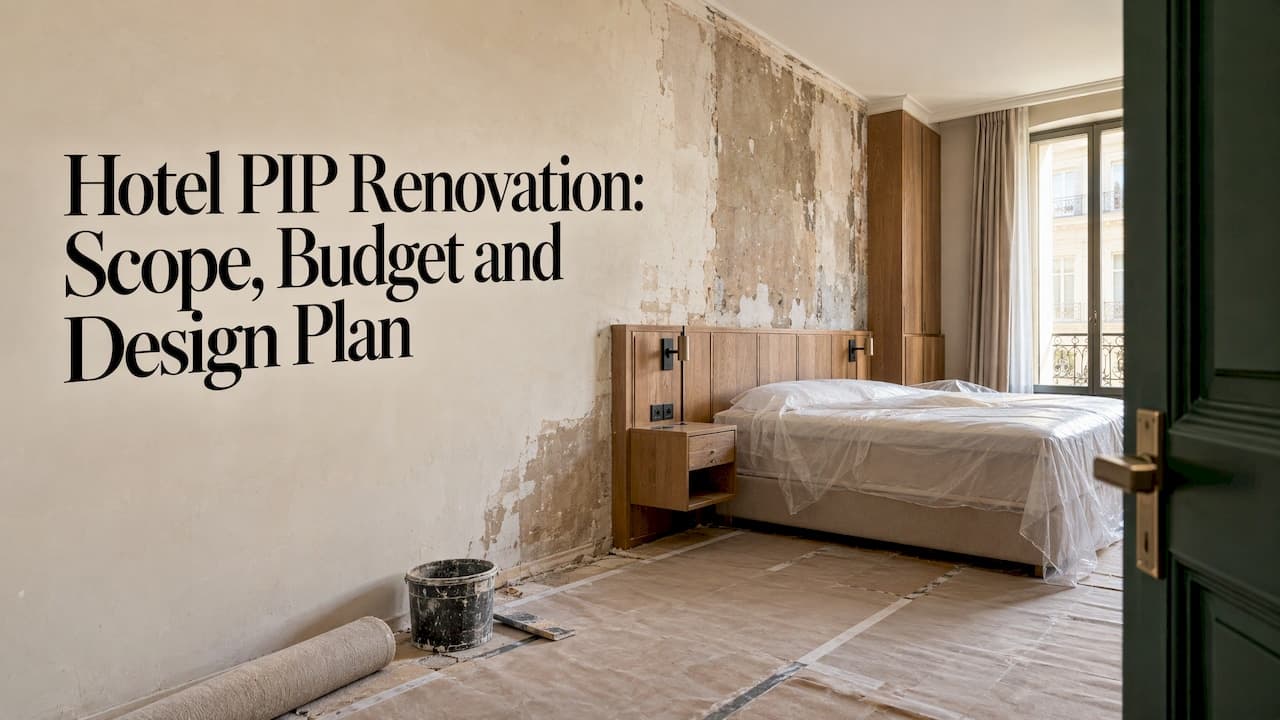
A hotel PIP renovation is the work a brand or franchisor requires you to complete to keep your flag. The owner pays for it and runs it, and the brand sets the deadline. You can't skip it, but you can control how well it's planned, designed, priced and sequenced. Those four decisions decide whether a PIP is a sunk cost or a rooms and rate upgrade that pays back.
This guide is for owners and asset managers facing a PIP notice. It covers what a PIP is, what it can include, what it costs, how to build a budget that holds, and where design fits in.
TL;DR
- A PIP is a brand-required scope with a completion deadline. It is different from a discretionary renovation you choose yourself.
- Published per-key figures range widely, from soft goods refreshes to full PIPs that can pass $40,000 per key. Your own bids are the only number that counts.
- Budget hard costs, soft costs, FF&E, OS&E, contingency and lost room revenue as separate lines.
- Bring a designer in before the scope is locked. Design decisions made early are the cheapest ones.
- Phasing guest-facing areas first is now a common way to manage cash and disruption.
Table of Contents
- What a hotel PIP is, and how it differs from an owner-led renovation
- What a PIP can require
- Timeline: from notice to sign-off
- What a hotel renovation costs
- How to build a PIP budget that holds
- Planning for risk and disruption
- Where design earns its fee in a PIP
- Our perspective
- How we can support your PIP
- FAQ
- Sources
What a hotel PIP is, and how it differs from an owner-led renovation
A property improvement plan is a plan for renovating a hotel to bring it into compliance with brand standards imposed by a [branded hotel manager or franchisor]. It is [required to keep the property's brand affiliation], so it comes with a deadline the brand sets.
The difference from an owner-led renovation is who holds the pen:
| Brand PIP | Owner-led renovation | |
|---|---|---|
| Trigger | Brand inspection, franchise renewal, change of ownership or a standards update | Your own plan for rate, positioning or condition |
| Scope set by | The brand, with the owner's input on how to meet it | You |
| Deadline | Set by the brand | Set by you |
| Design freedom | Within brand standards | Wide, if you are repositioning |
| Funding | Owner | Owner |
The useful insight is that the two overlap. A PIP defines the minimum. Many owners use the same closure window to add work that raises rate,because rooms are already out of service and contractors are already mobilized. Our guide to [hotel brand standards and how to design within them] covers where the brand's rules end and where your room to be distinctive begins.
What a PIP can require
The scope depends on the brand, the age of the building and what the inspection found. Common categories,as [described by one owner guide], include:
- Guest rooms and corridors: soft goods, case goods, flooring, lighting, bathrooms, wall finishes.
- Public areas: lobby and front desk, meeting spaces, fitness rooms, pools and on-site restaurants.
- Building systems and life safety: electrical capacity, plumbing, HVAC, fire alarm integration, sprinklers, accessibility and emergency lighting.
- Exterior: facade, signage, parking and landscaping.
- Brand identity: signage, artwork and the specific design elements the brand wants to see.
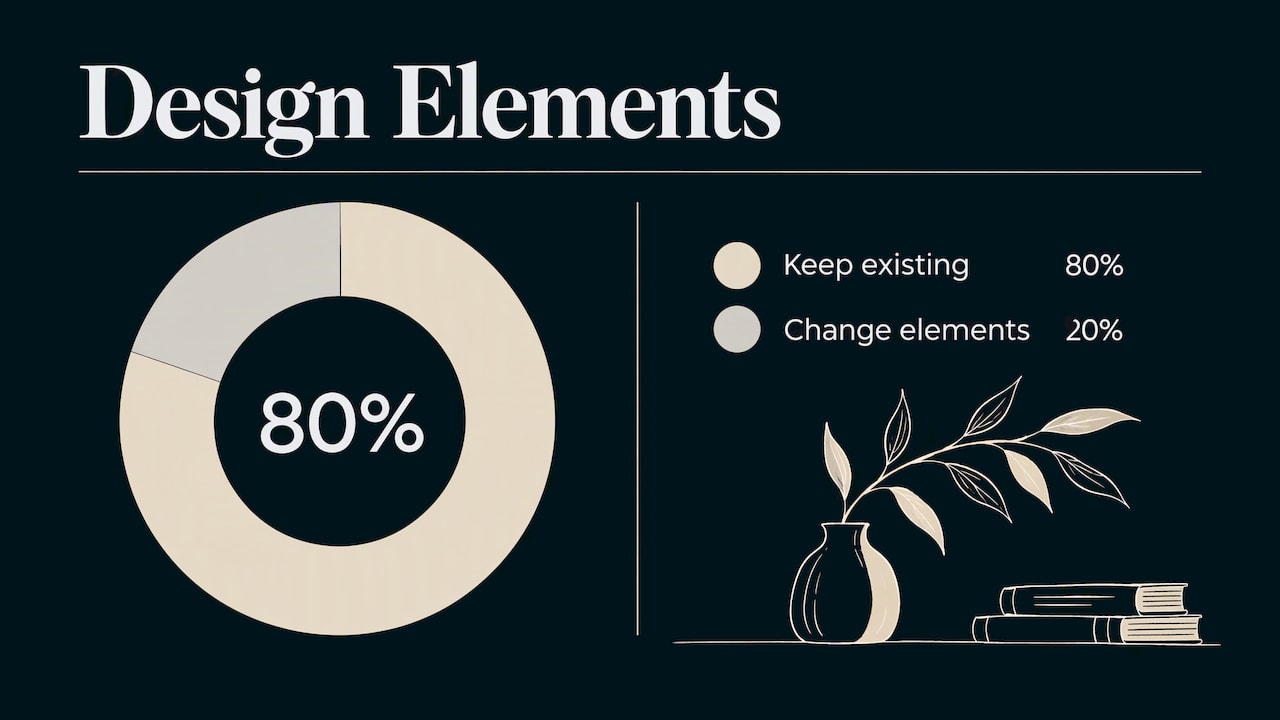
Cycle matters too. Hotel Dive reports that renovations on a branded hotel occur [every seven or 10 years]. Year-seven work is typically cosmetic, and year-ten work is more likely a complete gut and rehab. The same piece describes an approach of keeping about 80% of existing design elements and changing 20% (furniture, fabric, art, pillows) to maintain brand cohesion while refreshing the property.
That 80/20 logic is a good test for your own scope. Ask which items the brand actually requires and which are extras. Then ask whether the extras earn their cost.
Cycles also shape the whole ownership horizon. For a view of how long-run upkeep rhythms play out in another part of the accommodation business,see this piece on [luxury property upkeep cycles].
Timeline: from notice to sign-off
Hotel PIPs can be issued after an [inspection finds the property short of current standards]. The brand then sets requirements and a deadline,and the owner typically funds and manages the work. Brands often require completion within [12 to 24 months].
A realistic sequence looks like this:
- Read the PIP line by line. Separate the mandatory items from the recommended ones, and note any that you can negotiate or substitute.
- Appoint a designer and a cost estimator. Do this before you request bids.
- Concept and brand submission. In one example from Hotel Dive,[brand approval took about two months], and the general contractor's renovation then usually took about six months.
- Construction documents and procurement. Long-lead furniture and fixtures go on order early.
- Construction and phased room release.
- Brand inspection and sign-off.
The lesson from the timeline is that the 12 to 24 months disappear quickly. Approval cycles, procurement lead times and construction each take a large share. Starting design late is the most common way to compress the schedule and add cost.
What a hotel renovation costs
Published numbers vary because the scopes behind them vary.
- The HVS Hotel Cost Estimating Guide gives tier-based ranges for softgoods or full renovation. Its example "quick preliminary budget" for an Upper Upscale softgoods guestroom renovation was $8,426 to $11,[589 per guestroom], in 2018 dollars. The guide notes that it excludes items such as professional fees, contingency, attic stock, freight and sales tax, and that final costs must be built for the specific project.
- A midmarket PIP was quoted by an advisory firm at $35,000 to $40,[000 per key].
Treat these as orientation, not as a budget. A soft goods refresh and a gut renovation can sit an order of magnitude apart, and costs have moved since 2018. Your number comes from contractor and vendor bids on your drawings.
What drives the number
- Depth of work: soft goods only, or case goods, bathrooms and MEP.
- Building age and condition: hidden conditions behind walls and ceilings.
- Brand tier: the standards for an upper upscale flag are not those of an economy one.
- **Finish and fixture specification:** a bathroom built with durable fixtures costs more up front and less over the years. See our notes on [hotel bathroom design that lasts].
- FF&E procurement: furniture often lands well above its catalog price once freight,installation and handling are added. Our article on the [25 to 45% installed cost gap in FF&E] explains how to budget for it.
What interior design costs
Design fees are a soft cost, and they are priced by scope rather than by a standard rate. Studios typically quote a fixed fee per phase (concept, visualization, technical drawings, procurement support, site follow-up), and some add a share on procurement. The fee depends on the number of keys, the number of room types, the amount of public space and how much supervision you want on site. The way to compare quotes is to compare deliverables phase by phase: what is drawn, what is specified, how many revision rounds are included and who handles supplier coordination.
We publish no standard rates, because a 60-key PIP refresh and a lobby plus restaurant repositioning are different jobs. A scoped quote against your PIP document is the reliable way to price it.
How to build a PIP budget that holds
Early budgets are frequently too low. IHCS notes they tend to omit contingency, procurement, professional fees, permits, temporary operations, technology, freight,[taxes and lost revenue]. Use separate lines so nothing hides inside a trade total. DEV Builders warns that an estimate organized only by trade can [hide cost gaps] and recommends separating:
- Hard costs (construction)
- Soft costs (design, permits, inspections, testing, brand review fees, owner-side costs)
- FF&E
- OS&E
- Logistics
- Contingency
- Revenue impact
A worked example from x·quic shows how the pieces add up: a 100-room select-service hotel with $2,400,[000 in hard-cost bids], a 10% contingency of $240,000 and $160,000 for design, permits and project management reaches a funded budget of $2,800,000 before displacement.
Contingency
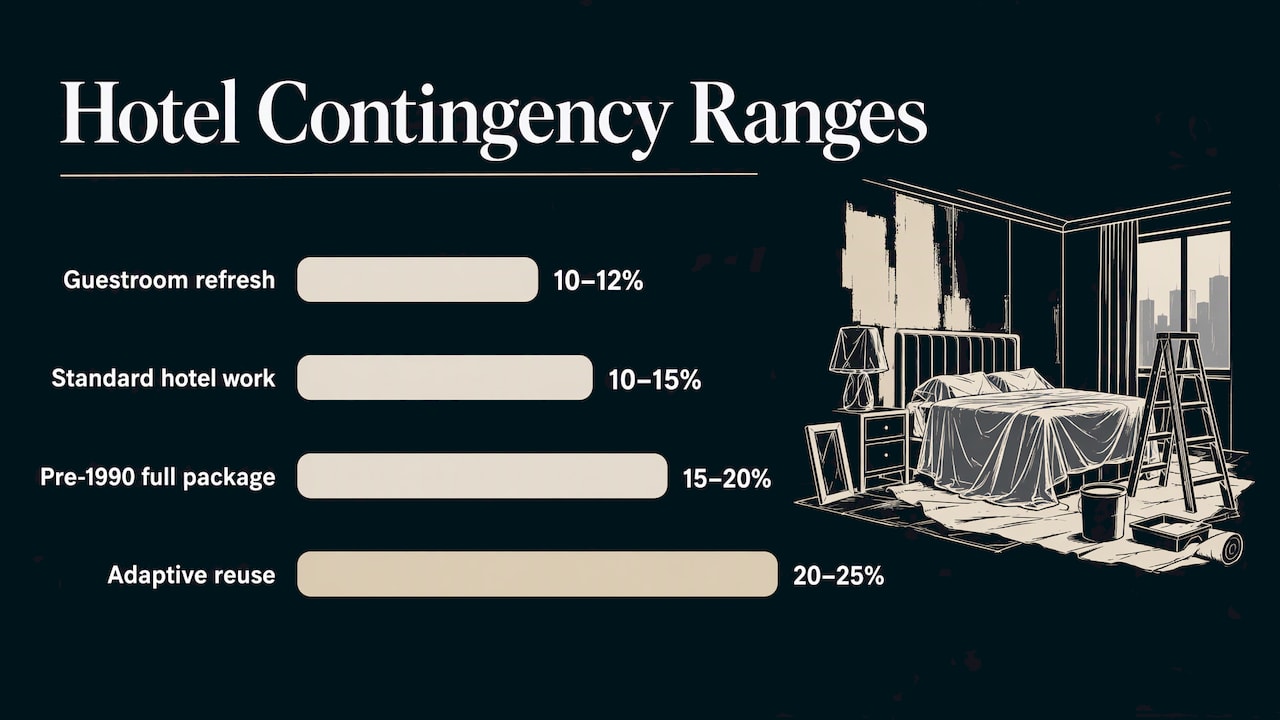
Hartford Building Company calls [10 to 15%] standard for hotel work because surprises in older buildings are common. Liberty Way gives a finer scale: 10 to 12 percent for a standard guestroom refresh in a relatively modern building, 15 to 20 percent for a full guestroom package in a property built before 1990,[and 20 to 25 percent for adaptive reuse]. The same source advises holding owner contingency separate from the contractor's own contingency, with clear authorization rules and documented draws.
Displacement
Rooms out of service are revenue you don't earn. The x·quic guide illustrates 3,500 out-of-order room nights at 60% occupancy and a $105 ADR, which produces about $220,[500 of displacement]. Phasing work into softer months can lower the occupancy assumption and the figure. Put your own numbers into this formula before you fix the schedule.
Planning for risk and disruption
Owners increasingly [phase PIPs and put the most impactful guest-facing areas first] when capital is tight. Two practical habits help:
Model three scenarios. IHCS recommends a minimum compliance scope,[a targeted value-creation scope and a full repositioning scope]. For each, estimate capex, closure days, displacement, ramp-up, ADR and occupancy effects, and return.
Stress the downside. Test delayed opening, lower occupancy, construction inflation and slower recovery in review scores. If the project works only on an optimistic forecast, change the scope, the price or the capital structure.
Delivery method matters as well. If you are choosing between a single contractor team and separate design and bid stages,our [five owner tests for design-build versus design-bid-build] give a quick way to decide.
Where design earns its fee in a PIP
A PIP tells you what to replace. Design decides how it looks, works and lasts. A few places where it pays:
- Meeting the standard without a generic result. Brand standards set the frame. Within it you choose layout, materials, lighting and the local character that guests remember.
- The lobby. It is the first and most-photographed space. See our [lobby design guide] for layout, furniture and renovation choices.
- Clear drawings. Complete construction documents reduce change orders and rework. We explain this in our piece on [construction drawings for hospitality interiors].
- Durable specifications. Fabrics and finishes should be chosen for cleaning and wear in service. See [commercial upholstery fabrics].
- Current guest expectations. Our [2026 hotel design trends] piece sorts what is worth acting on.
Our perspective
Most PIP problems we see are decided before construction starts. The notice arrives, the owner asks contractors for prices, and design is treated as a line to add later. By then the scope is fixed by whoever priced it first.
We work the other way round. We start with the brand standard and the building, then separate what is mandatory from what is worth doing while the rooms are closed. Preliminary design shows the owner the options. Visualization lets the owner and the brand see the result before anything is ordered. Execution drawings give every bidder the same information, so bids compare like for like.
Hospitality is all we design: hotels, restaurants and large commercial spaces. Our process runs from concept through furniture and materials selection to site and supplier follow-up, so the design intent that the brand approved is the one that gets built. A PIP can be a checklist, but it can also be a chance to give the property a clear identity. We argue for the second.
slava
How we can support your PIP
We design hospitality interiors end to end. For a PIP,the relevant services are [preliminary design],[3D visualization] for brand and owner approval,[execution drawings], furniture,[materials and accessories] selection,and [site and supplier follow-up].
Send us your PIP document and the number of keys,and we will scope the design work against it. You can see everything we offer on our [services page],or see how we handle a hospitality venue in our [Nipper Bar project].
FAQ
How often does a branded hotel need a PIP renovation?
Brands commonly work on a seven or 10 year cycle,according to [Hotel Dive]. The year-seven round is usually cosmetic, and the year-ten round is more likely a deep renovation. Your franchise agreement and the brand's inspection findings set the actual timing.
How long do I have to complete a PIP?
The brand sets the deadline. Brands often require completion within [12 to 24 months], so confirm the dates in your PIP document and start design and procurement early to protect them.
How much contingency should a hotel renovation budget include?
A range of [10 to 15%] is a common standard, and older buildings or full replacements can justify more. Set it by the property's real risk profile, such as MEP, roof, moisture and life-safety unknowns, rather than applying one fixed percentage.
Does design cost belong in a PIP budget?
Yes. Design fees are a soft cost, along with permits,project management and brand review charges. A per-key construction figure on its own [can understate the all-in amount], so list design as its own line from the start.
Sources
- Property Improvement Plan,[Practical Law]
- What Is a Hotel Property Improvement Plan (PIP)[?]
- How hoteliers can maximize ROI on branded hotel renovations,[Hotel Dive]
- [Hotel Property Improvement Plan owner guide]
- [HVS Hotel Cost Estimating Guide 2018]
- [Things to Consider If Your Hotel PIP Is Coming Due]
- [Hotel Renovation Planning Steps That Protect Returns]
- [Hotel PIP Costs and Estimate Renovation Budgets] - Hotel PIP Planning Guide: Scope, Budget,[Phasing]
- [How Hotel Renovations Work in Connecticut]
- [Hotel Renovation Contingency Planning] - Hotel owners take a phased approach to PIPs,[HotelManagement]
- [How Do I Budget a Hotel Renovation or PIP?]