LVT vs Tile: Warmer Floors, Less Upkeep, Faster Installation at Home
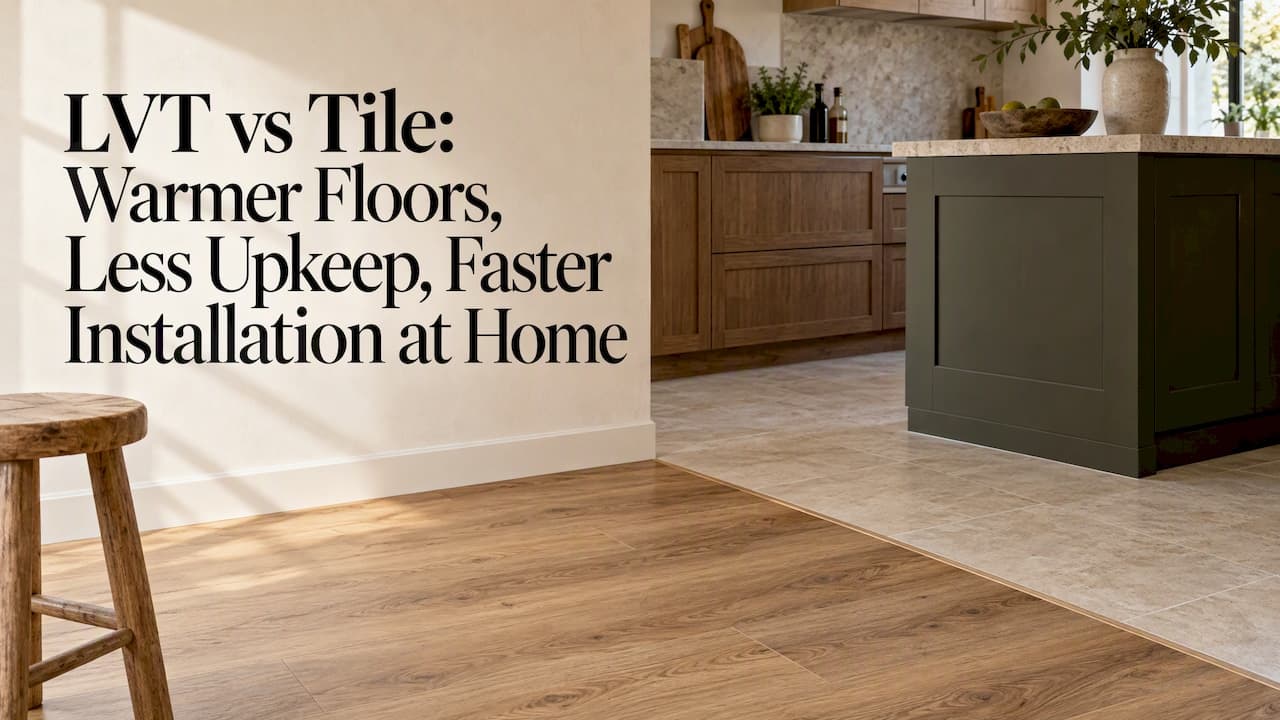
For most homeowners who care most about comfort and low maintenance, LVT is the stronger everyday choice; tile earns its keep when you want radiant-heat performance, fully custom patterns, or the longest possible lifespan. Both materials now resist water well,so the real decision usually comes down to feel underfoot and how much upkeep you want. [Trade comparisons confirm this split],and industry benchmarks like [ASTM F3261] back the performance claims behind it.
TL;DR:
- Choose tile when scratches from pets or furniture are the main concern; choose rigid core LVT when dropped objects pose greater risk.
- For showers or areas exposed to standing water over years, tile offers greater permanence, but its grout needs periodic resealing to resist moisture.
- Tile pairs naturally with radiant heating, while LVT works only when its manufacturer permits installation within stated surface temperature limits.
- LVT generally costs less upfront and installs faster; floating systems suit flat, sound subfloors, while structural issues and complex tile patterns call for professionals.
- Neither material has a clearly better environmental profile across all products, so ask suppliers about recycled content, manufacturing certifications, and end of life recycling.
Table of Contents
- LVT vs Tile at a Glance
- How LVT and Tile Compare, Dimension by Dimension
- How to Choose the Right Floor for Your Home
- What to Expect During Installation
- Environmental Impact and Sustainability Considerations
- Acoustic Properties and Noise Insulation
- Choosing Flooring for Hospitality Settings
- Underfloor Heating Beyond Basic Radiant Performance
- Furniture Loads and Heavy Foot Traffic in Hospitality Spaces
- Flooring Trends Shaping Hospitality Design
- A Designer's View on Choosing Between Tile and LVT
- Get Flooring Decisions Right From the Start of Your Project
- FAQ
- Sources
LVT vs Tile at a Glance
Before getting into the technical reasons behind each difference, here is how the two materials stack up on the factors homeowners ask about most.
- Comfort underfoot: LVT is warmer and softer; tile is harder and colder. LVT wins.
- Durability: Tile resists scratches better over decades; LVT resists chipping and cracking. Depends on use.
- Water resistance: Both perform well now, but grouted tile has fewer seams for long-term moisture issues. Tile wins for extreme exposure.
- Maintenance: LVT needs simple sweeping and mopping; tile grout needs periodic sealing. LVT wins.
- Appearance: LVT mimics wood and stone convincingly; tile allows unmatched custom patterns and mosaics. Depends on your design goal.
- Installation and time: LVT installs faster with floating or glue-down methods; tile requires mortar curing time. LVT wins on speed.
- Heated floors: Tile conducts and holds heat more efficiently. Tile wins.
- Repairability: Replacing a single LVT plank is simpler than matching an old tile. LVT wins.
How LVT and Tile Compare, Dimension by Dimension
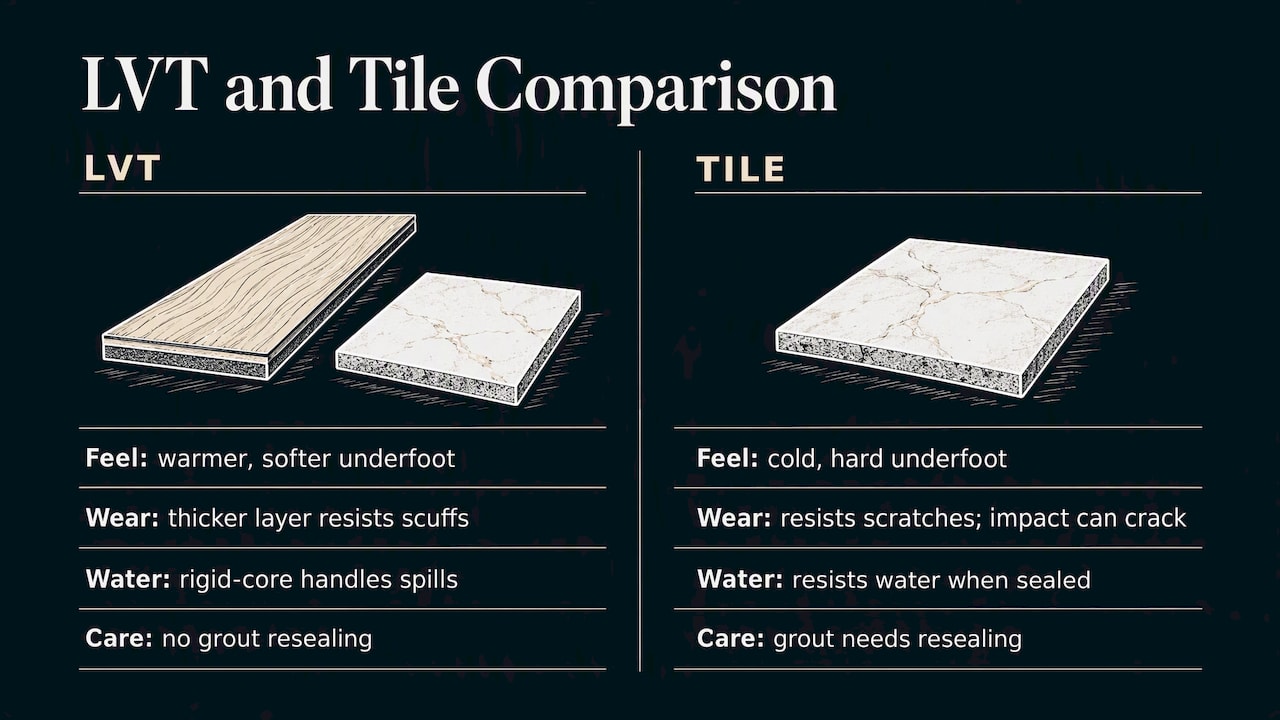
Comfort and underfoot feel come down to basic physics. Tile is dense and thermally conductive, so it pulls heat away from bare feet and stays cold in most climates. LVT has a cushioned core and lower thermal mass, which is why bathroom flooring comparisons consistently describe it as warmer and softer,especially in bathrooms and kitchens where people stand for long stretches. [Floor Covering Weekly] has reported similar feedback from installers working on both residential and commercial floors.
Durability depends on what kind of wear you're worried about. LVT's performance rests largely on its wear layer thickness, measured in mils: a thicker wear layer resists scuffs and scratches better over time. Rigid-core constructions, built to specifications like ASTM F3261, have closed much of the durability gap that used to separate vinyl from harder surfaces. Tile, meanwhile, resists scratching almost entirely but can crack under impact or structural movement,a failure mode LVT rarely has. [Trade press coverage] frames this as a trade-off rather than a clear winner: pick tile if you're worried about scratches from pets or furniture, pick rigid-core LVT if you're worried about dropped items cracking the surface.
Water resistance has narrowed considerably. Waterproof rigid-core LVT now handles spills and splashes without swelling, which is why it shows up so often in kitchens and laundry rooms. Tile, when properly installed and sealed, is also highly water resistant, but its grout lines are a long-term vulnerability if sealing lapses. For a shower surround or a space that will see standing water for years, tile still tends to hold the edge on permanence.
Maintenance routines differ in effort more than frequency. Both floors need regular sweeping and occasional mopping, but tile grout needs periodic resealing to stay stain and moisture resistant. LVT skips that step entirely, which is part of why manufacturers market it as the lower-effort option for busy households, a claim Floor Covering Weekly's reporting generally supports.
Appearance is where personal taste takes over. LVT's printed layers now replicate wood grain and natural stone convincingly, often at a glance. Tile, though, remains unmatched for true customization: mosaics, mixed materials, and intricate patterns that LVT simply can't replicate at the same level of detail.
Installation and cost vary by method. LVT can be installed as a floating click system, glued down, or loose-laid, and most of these methods move faster than tile's mortar-and-grout process, which needs curing time before the floor can be walked on. Installation coverage from the trade press notes that floating LVT reduces subfloor prep work, while glue-down LVT and traditional tile setting both demand more labor and time, pushing costs higher on complex layouts.
Heated floors favor tile for a simple reason: it conducts and retains heat efficiently, which is why most radiant systems are designed with tile in mind. LVT can sometimes be installed over radiant heat, but only within strict temperature limits set by the manufacturer, so checking those specs before installation matters.
Lifespan and repairs follow from the durability differences above. A cracked tile often needs full replacement and color matching against aged grout, which can be difficult years later. A damaged LVT plank is usually easier to swap, provided you kept spare material from the original installation.
How to Choose the Right Floor for Your Home
Run through this short checklist before you commit to either material.
- Check your moisture exposure. Bathrooms, mudrooms, and basements favor waterproof LVT or well-sealed tile, depending on how much standing water you expect.
- Think about comfort needs. If you or a family member stands for long periods in the kitchen, LVT's cushioned feel will matter more than it sounds.
- Set your budget range. LVT generally costs less upfront and installs faster; tile tends to cost more but can outlast it in heavy-use areas.
- Decide on radiant heat. If you want heated floors, tile is the safer long-term bet; confirm any LVT product's heat tolerance before installing over a radiant system.
- Weigh your tolerance for grout maintenance. If resealing grout sounds like a chore you'll skip, LVT removes that task entirely.
- Match the timeline to your project. A bathroom with in-floor heat suits tile, a busy family kitchen suits waterproof LVT, a designer-patterned entry or spa suits tile, and a basement over concrete suits waterproof LVT.
Hire a professional installer when your subfloor has structural issues, when you're planning a complex tile pattern, or when transitions between rooms need careful planning. Simpler floating LVT installs over a flat, sound subfloor are reasonable DIY projects for many homeowners.
What to Expect During Installation
Subfloor prep is the first fork in the road. Tile needs a flat, rigid substrate because any flex can crack grout lines or the tile itself. LVT is more forgiving of minor irregularities, though installer guidance still recommends addressing bumps and dips before laying it down.
- Click or floating LVT: fastest to install, minimal prep, good for DIY.
- Glue-down LVT: better for high-traffic areas and heavier furniture loads, but slower to install.
- Loose-lay LVT: quick to place, easy to lift for repairs.
- Tile with mortar and grout: slowest method, requiring curing time before foot traffic resumes.
Material and labor costs vary widely by region and project complexity, and figures aren't available here with enough specificity to quote responsibly, but complex patterns, demolition of old flooring, and radiant heat installation all push the total higher regardless of which material you choose.
Pro Tip: Keep a box of spare planks or leftover tiles from your installation so future repairs match the original floor instead of forcing a visible patch.
Environmental Impact and Sustainability Considerations
Sustainability comparisons between LVT and tile depend heavily on manufacturing process, raw materials, and end-of-life disposal, areas where claims vary by brand and product line. Some manufacturers publish sustainability management programs covering their production practices, and it's worth checking a product's documentation directly rather than assuming one category is automatically greener. Tile is typically made from natural clay and minerals fired at high temperatures, a process that's durable but energy intensive. LVT is a petroleum-based product in most formulations, though rigid-core versions have introduced recycled content in some lines.
Longevity factors into the sustainability picture too. A tile floor that lasts several decades without replacement can offset its manufacturing footprint over time, while LVT's shorter typical service life may mean more frequent replacement cycles. Neither material has a clearly superior environmental profile across the board, so homeowners focused on sustainability should ask suppliers directly about recycled content, manufacturing certifications, and end-of-life recyclability before choosing.
Acoustic Properties and Noise Insulation
Sound transmission is an underrated difference between these two materials. Tile is dense and hard, which means footsteps, dropped items, and voices tend to echo more, especially in open layouts or homes with hard ceilings below. LVT, particularly rigid-core formats, often includes an attached underlayment layer that absorbs some impact noise, a feature noted in the ASTM F3261 specification covering rigid polymeric core resilient flooring.
That built-in underlayment helps reduce the hollow, tapping sound that hard floors are known for, making LVT a quieter choice in multi-story homes or apartments where noise transfer between floors matters. Tile can be paired with an underlayment too, but it adds another installation step and cost that LVT often handles natively. If noise control is a priority in a bedroom, home office, or second-floor living space, that acoustic cushioning tips the decision toward LVT.
Choosing Flooring for Hospitality Settings
Hotels and restaurants put flooring through a different kind of stress than a private home, and the right material often depends on the space's specific role. Hotel corridors and guest rooms benefit from flooring that balances guest comfort with easy upkeep across dozens or hundreds of rooms,a trade-off we explore in our [piece on hotel corridor flooring choices]. Restaurants, by contrast, deal with heavier foot traffic, spills, and zone-specific safety needs, which is why material selection often varies by area within the same venue,as we discuss in our [guide to restaurant flooring by zone].
Tile tends to dominate in commercial kitchens and high-moisture back-of-house areas where heat and chemical exposure are constant. LVT often shows up in dining rooms, lobbies, and guest corridors where comfort, noise reduction, and faster replacement matter more than extreme durability against industrial use. The right call usually isn't one material across an entire property, but a deliberate mix based on how each zone gets used.
Underfloor Heating Beyond Basic Radiant Performance
Radiant heat compatibility isn't just about which material conducts warmth best. It also affects system design, installation sequencing, and long-term reliability. Tile pairs naturally with both hydronic and electric underfloor heating systems because its thermal mass holds and releases heat evenly, which is part of why dedicated under-tile heating products exist, such as electric heating mats designed specifically for tile installations.
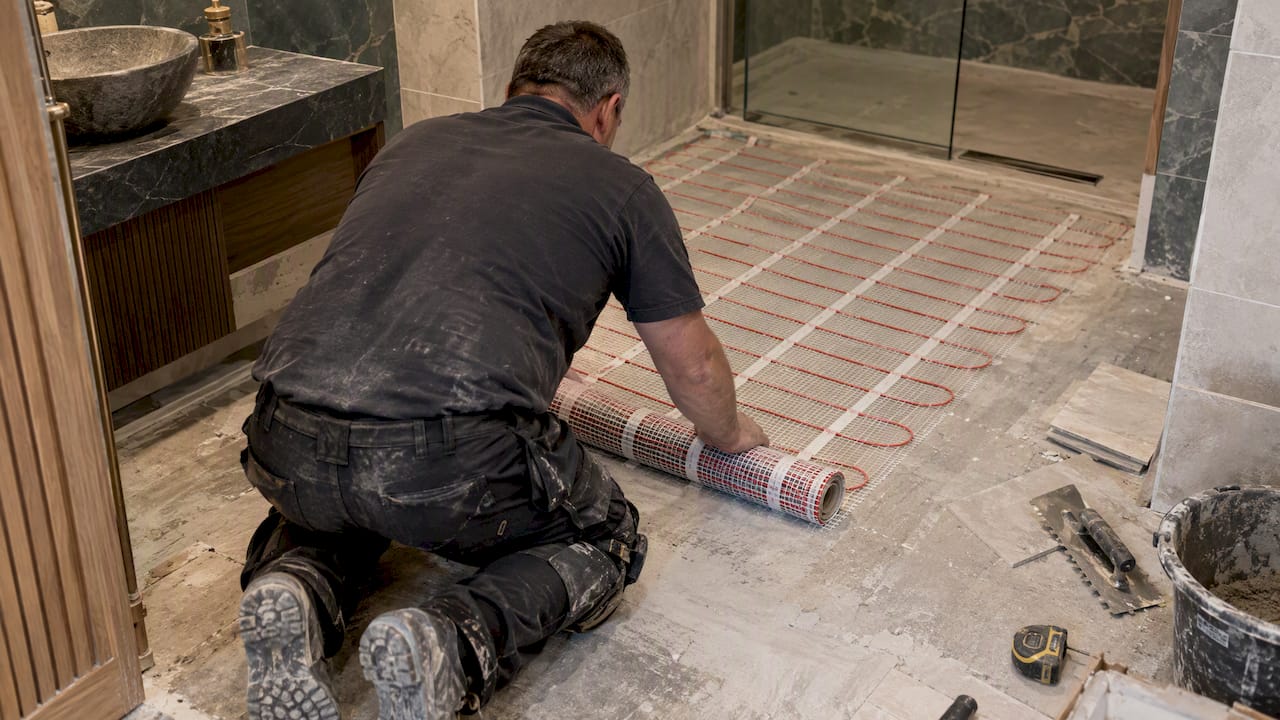
LVT can sometimes be installed over underfloor heating, but manufacturers set maximum surface temperature limits to prevent warping or adhesive failure, so that spec sheet is worth reading before committing to a heated LVT floor. Installation sequencing matters too: heating elements typically need to be set and tested before the finished flooring goes down, regardless of which material you choose, and any project involving radiant heat benefits from coordinating the heating contractor and flooring installer closely.
Furniture Loads and Heavy Foot Traffic in Hospitality Spaces
Commercial furniture is heavier and gets moved more often than most residential pieces, and that changes how flooring holds up over time. Tile resists dents from heavy tables and chairs well, since its hardness means point loads rarely leave a lasting mark. LVT can dent under sustained heavy loads from furniture legs, particularly with softer formulations, though rigid-core products with thicker wear layers handle this better than older flexible vinyl.
Foot traffic volume is the other factor. In high-traffic hospitality zones like hotel lobbies or restaurant dining rooms, glue-down LVT installations are often preferred over floating systems because the adhesive bond better resists the shifting and wear that constant movement causes. Tile, by nature of its mortar-set installation, is inherently stable under heavy traffic without needing a different installation method for commercial use.
Flooring Trends Shaping Hospitality Design
Hospitality design has leaned toward flooring that photographs well and performs reliably under constant use, which has pushed rigid-core LVT into more prominent roles than it held a decade ago. Trade coverage points to improved waterproofing and durability as the reasons LVT now competes credibly with hard surfaces in high-traffic commercial environments, not just budget residential projects.
At the same time, tile hasn't lost ground in spaces meant to signal permanence or luxury, like hotel lobbies, spa areas, or statement restaurant entries, where custom patterns and natural stone finishes still carry a weight that printed vinyl can't fully replicate. The trend isn't one material replacing the other. It's designers choosing each material deliberately by zone, pairing tile's visual authority in showcase areas with LVT's comfort and practicality in guest rooms, corridors, and dining spaces.
A Designer's View on Choosing Between Tile and LVT
In practice, the decision rarely comes down to specs alone. Grout color, plank direction, and transition details change how either material reads in a finished space, often more than the material choice itself. We balance tile's permanence against LVT's comfort and speed depending on a project's guest experience goals and maintenance budget. If heated floors, complex transitions, or mixed-material layouts are part of your plan, bringing in a designer early avoids costly rework later.
— slava
Get Flooring Decisions Right From the Start of Your Project
Choosing between LVT and tile gets a lot easier when it's mapped against your actual floor plan, traffic patterns,and guest experience goals rather than decided in isolation. We work through those decisions as part of our [Preliminary Design] phase, where flooring, furniture, and material choices get evaluated together before anything is finalized. For hospitality projects specifically, we've applied this thinking across restaurant and hotel interiors,including work like our [QUEEN Odessa restaurant design], where material selection had to hold up under daily commercial use while still looking the part.
Once a direction is set,our [3D Interior Visualization] service lets you see how flooring, lighting, and furnishings interact before a single tile or plank is ordered. If you're planning a hospitality space or a larger commercial project and want flooring decisions handled as part of a complete design process,check out our [full range of services] to see where we can step in.
FAQ
Can You Mop Vinyl Flooring?
Yes, LVT is designed to be mopped with water or a manufacturer-approved cleaner, and it's one of the easier flooring types to maintain day to day. Avoid abrasive cleaners or excessive standing water, especially around seams on floating installations.
Is LVT Considered Tile?
No, LVT (luxury vinyl tile) is a resilient flooring product made primarily from vinyl layers, while ceramic and porcelain tile are fired clay products. They're often compared because LVT is designed to mimic tile's look, but they're built from different materials with different performance characteristics.
Do High-End Homes Use Vinyl Plank Flooring?
Yes, rigid-core LVT and vinyl plank products have improved enough in durability and realistic finishes that trade coverage now describes them as credible alternatives to hardwood and stone even in higher-end residential and commercial projects. The decision usually comes down to design goals and maintenance preferences rather than budget alone.
Is Tiling Cheaper Than LVT?
Not usually. LVT typically costs less upfront and installs faster due to simpler methods like floating or glue-down systems, while tile's mortar-and-grout installation tends to be more labor intensive and costly, particularly for complex patterns. Tile can still be the better long-term value in spaces where its durability and permanence matter more than upfront savings.
Sources
- LVT vs. Tile Bathroom Flooring:[Which Is Better for Syracuse Homes?]
- [F3261 Standard Specification for Resilient Flooring in Modular Format with Rigid Polymeric Core] - LVT vs Ceramic Tile:[Choosing the Best Flooring for Your Home]
- More than a pretty face:[LVT offers durability and value | Features | Floor Covering Weekly]