Stop 90 Minute Melatonin Loss: Blackout Curtains vs Blinds
For the most complete blackout, choose heavy-lined curtains or a layered system; for daylight you can adjust throughout the day,choose blinds or blackout roller shades. Ordinary room light before bedtime can suppress melatonin and shorten its duration by [about 90 minutes], so the choice affects sleep, not just comfort. Pick cordless hardware for safety, and when a single window needs both total darkness and better insulation, layering a shade with a drape usually beats either option alone.
TL;DR:
- Proper mounting and layering are essential to achieve true blackout and avoid light leaks around curtains' edges or blinds' gaps.
- Cellular shades can provide up to 20% energy savings in winter, making them a cost-effective insulation option over vinyl blinds.
- Safety concerns favor cordless or motorized window treatments, especially in nurseries or spaces accessible to children and pets.
- For maximum blackout and insulation, layering a blackout roller shade behind a lined curtain is more effective than choosing a single product.
- Installing treatments wider and higher than the window and sealing gaps with weatherstripping significantly improves light blocking and thermal performance.
Table of Contents
- Curtains vs Blinds: Light Blocking, Privacy, Insulation, and Cost
- A Step-by-Step Way to Choose Curtains, Blinds, or Both
- What "Blackout" Actually Means by Material
- Installation Fixes That Close Light Gaps Without Replacing Windows
- How We Specify Window Treatments for Hospitality Projects
- Quick Wins We've Used on Real Projects
- FAQ
- Sources
Curtains vs Blinds: Light Blocking, Privacy, Insulation, and Cost
Fabric opacity gets most of the attention, but the bigger problem with curtains is almost always the gap around them, not the weave itself. Even a dense, triple-weave panel lets light spill in along the top, sides, and floor unless it is mounted wide and high with a generous overlap. Blinds and roller shades, by contrast, block light inside a tighter frame but introduce their own leak point: the slight gap at the slat edges or the roll tube that shows as a thin halo of light around the perimeter.
A central blackout roller shade or a fully lined drape blocks the middle of the window well. A slatted blind, even closed tight, almost always leaks some light between slats and at the side channels unless paired with a frame-mounted track. That is the core trade-off: curtains fail at the edges, blinds fail at the seams.
Insulation tells a similar story with real numbers behind it. Cellular, or honeycomb,shades trap air in their pocketed structure and can cut heating-season energy use by [up to 20%] compared with the flat vinyl blinds found in most homes, with modeled total energy savings reaching 15% in some scenarios. Vinyl and metal blinds remain the most common window covering in American homes at roughly 60% market share, with curtains at about 19%, largely because blinds cost less and install faster.
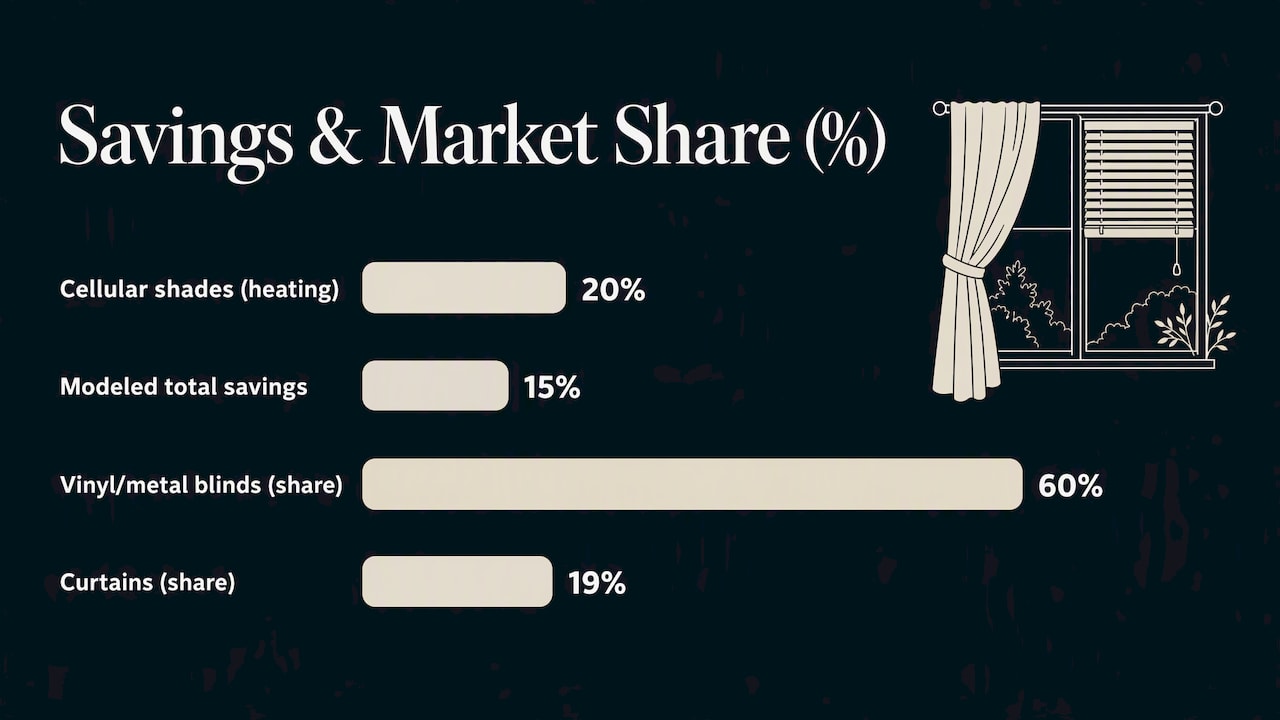
One sourced figure worth remembering: cellular shades can deliver up to 20% heating-season savings over standard vinyl blinds, though the exact payoff depends on climate and how tightly the shade fits the frame.
Cost and upkeep diverge too:
- Vinyl or faux-wood blinds are generally the cheapest option and wipe clean in minutes, making them a common pick for kitchens and bathrooms.
- Lined or interlined curtains cost more upfront and need occasional washing or dry cleaning, but they soften a room acoustically in ways hard surfaces cannot.
- Cellular shades sit in the middle on price and need light vacuuming or dusting rather than washing.
- Roller blackout shades are low maintenance and simple to wipe down, though pleats can trap dust over time.
Safety is not optional. Corded blinds and shades remain a strangulation hazard for infants and young children,and the [Consumer Product Safety Commission recommends going cordless] rather than tying up or shortening existing cords. If a nursery or playroom window needs coverage, cordless cellular shades or curtains with no dangling hardware are the safer default.
Style preference often decides the final call once performance needs are met. Blinds read clean and architectural, which suits modern kitchens, home offices, and bathrooms where moisture resistance matters. Curtains add softness, texture, and warmth, which fits bedrooms, living rooms, and any space where you want the window treatment to double as decor.
Pro Tip: When a single treatment cannot hit both your blackout and insulation targets, layer a blackout roller shade behind a lined drape instead of upgrading to a pricier single product.
A Step-by-Step Way to Choose Curtains, Blinds, or Both
Start with your actual goal rather than the product category, since the right treatment changes depending on what the room needs most.
- Name the primary goal. A bedroom chasing deep sleep wants maximum darkness; a media room wants darkness plus sound dampening; a nursery wants darkness plus cordless safety; a home office chasing lower bills wants insulation first.
- Match the goal to a treatment. Sleep and media rooms lean toward lined curtains or a shade-plus-drape combo; nurseries lean toward cordless cellular shades or cordless curtains; energy-focused rooms lean toward cellular shades.
- Measure for overlap, not just window size. For curtains, order panels wide enough to extend 4 to 8 inches past each side of the frame and mount the rod high enough to clear the top gap; for shades, confirm the mounting depth before ordering an inside mount.
- Check your lease or budget constraints. Renters can use tension rods, adhesive hooks, or magnetic strips to hang curtains and shades without drilling, which still closes most of the light gap.
- Ask the right questions before buying. Confirm with an installer or landlord whether outside mounting is allowed, what the warranty covers, and whether the product can be returned if the fit is off.
- Flag two red flags before you order. Skip corded products anywhere children or pets have access, and favor fabric-backed shades over PVC-backed ones if you are sensitive to off-gassing or plastic odor,since [some blackout and roller products use PVC backings that can contain phthalates].
Pro Tip: If you rent, a well-fitted cordless cellular shade combined with a tension-rod curtain often gets you most of the blackout a hardwired system would, without a single drilled hole.
What "Blackout" Actually Means by Material
"Blackout" is not one standard. It is a range of constructions, and the difference between them explains why two products marketed the same way can perform very differently.
- Triple-weave curtains use a tightly woven middle layer sandwiched between two face fabrics, which blocks most light while staying flexible enough to drape well.
- Foam or acrylic-backed curtains coat the back of a regular fabric with a light-blocking layer, which blocks light effectively but can feel stiffer and trap more heat against the glass.
- Interlined curtains add a separate insulating layer between the face fabric and lining, improving both blackout and thermal performance at a higher cost.
- Blackout roller shades use a single opaque or foam-backed sheet that blocks light well across the main pane but still leaves narrow gaps at the sides unless paired with a side channel.
- Cellular (honeycomb) shades trap air in a pocketed cell structure, trading some light-blocking power for the measurable heating-season savings described earlier.
- Vinyl or faux-wood slat blinds hold up well in humid bathrooms and kitchens since they resist warping, but the gaps between slats mean they rarely reach true blackout on their own.
On materials, it is worth knowing that some PVC-backed shades and curtain linings can contain phthalates, so fabric-backed or interlined options are the better choice if you want to avoid that off-gassing entirely. For a room that needs both deep darkness and lower heating bills, a cellular shade mounted inside the frame with a lined drape layered over it covers both bases better than either product alone.
Installation Fixes That Close Light Gaps Without Replacing Windows
Most light leakage is a mounting problem, not a fabric problem, and it is fixable without touching the window itself.
- Mount curtain rods wide and high. Extend the rod 4 to 8 inches beyond the frame on each side and hang it close to the ceiling so the panel can overlap the frame fully, and add a pelmet or box header above the rod to block the gap where light sneaks over the top.
- Use side channels or wraparound tracks on shades. These close the thin vertical gap at the edge of a roller or cellular shade, which is usually the biggest remaining leak once the shade itself is centered correctly.
- Add adhesive foam weatherstripping around the frame where a shade or blind sits close to the glass, which helps block drafts and improves the thermal benefit alongside the light-blocking one.
- Upgrade to cordless or motorized hardware wherever children or pets are present, and call in a professional installer for motorized tracks, oversized panels, or any mount that requires anchoring into tile or masonry.
Cleaning routines matter too, especially in humid climates where mold can grow behind shades mounted tight to a damp window. Wipe vinyl and faux-wood blinds with a damp cloth monthly, vacuum cellular shades with a soft brush attachment, and air out lined curtains seasonally rather than leaving them pressed against a cold, condensation-prone pane.
Pro Tip: A $10 roll of adhesive weatherstripping around an inside-mount shade often closes more light than switching to a pricier "blackout" label.
How We Specify Window Treatments for Hospitality Projects
In hotel and restaurant work, we rarely rely on a single product to do the job of blocking light, managing acoustics,and setting the mood all at once. On projects like [Queen Restaurant Complex], we typically specify a blackout or dim-out roller shade on a motorized track paired with a decorative drape, since guests need total darkness at night and adjustable daylight control during the day, and the fabric layer softens hard surfaces acoustically.
- Darker, denser linings read as deeper and more restful in a guest room, while lighter linings keep a lobby or dining space feeling open even when partially closed.
- Commercial-grade tracks and motors are built to withstand daily cycling far better than consumer hardware, which matters when housekeeping operates the same shade dozens of times a week.
- Site coordination and supplier follow-up become essential at this scale, since fabric, lining, and hardware often come from different vendors who all need to agree on timing and tolerances.
For complex or oversized windows,we rely on [3D visualization]and [execution drawings] to confirm how a layered system will look and perform before any fabric is cut.
Quick Wins We've Used on Real Projects
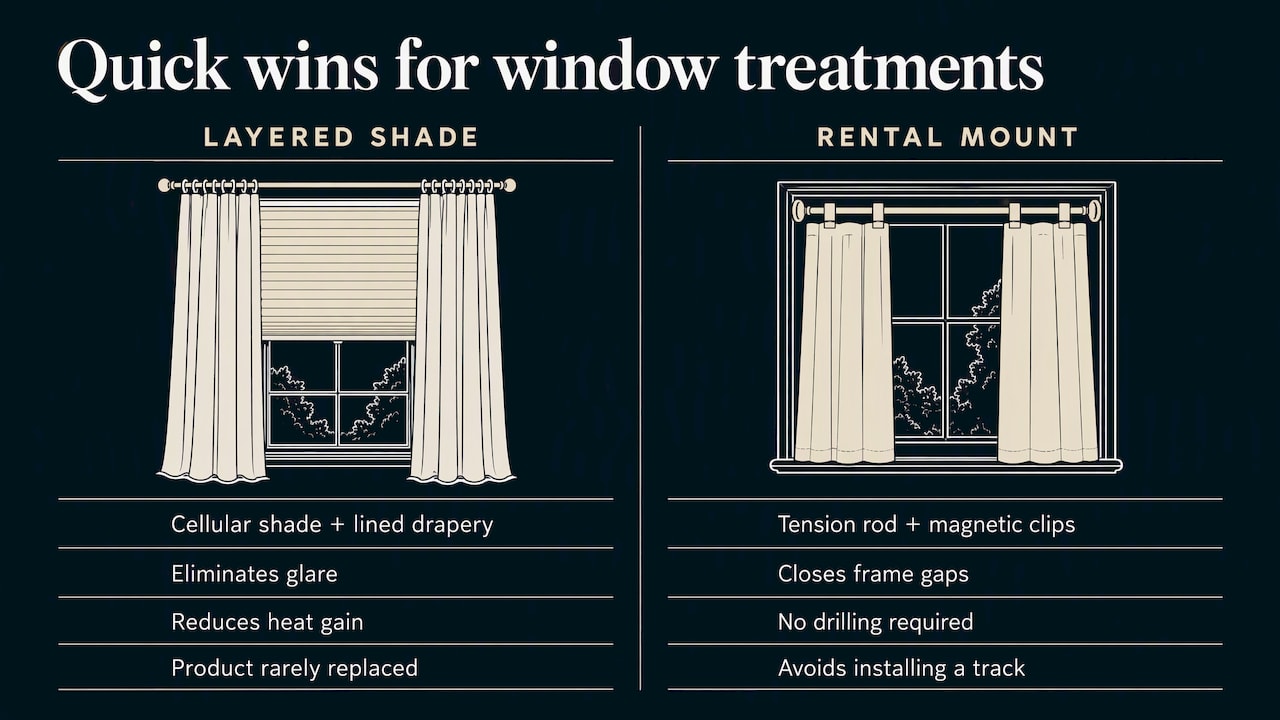
On a coastal residential project,[layering a cellular shade behind lined drapery] solved both the glare problem and the heat gain problem that neither treatment handled alone. For renters without drilling rights, a tension rod paired with magnetic curtain clips along the frame edge has closed gaps that would otherwise need a track installed.
The pattern holds across most rooms: the product rarely needs replacing, the mounting does.
— slava
This article is general information, not a substitute for advice from a qualified doctor. Consult a qualified healthcare professional about your own circumstances before acting on anything here.
FAQ
Is it better to have blackout blinds or curtains?
Blackout roller shades or cellular shades give tighter, more adjustable light control, while heavy-lined curtains give deeper total darkness when mounted wide with overlap. For the darkest, most insulated room, layering both outperforms either one alone.
What are the disadvantages of blackout curtains?
They cost more than basic blinds, need occasional washing or dry cleaning, and some foam or PVC-backed versions can contain phthalates, so fabric-backed options are the safer pick if that is a concern. They also still leak light at the top and sides unless mounted with enough overlap.
What looks nicer, blinds or curtains?
Blinds suit clean, modern kitchens, bathrooms, and offices, while curtains add texture and warmth that fit bedrooms and living rooms better. Neither is objectively nicer: the right choice depends on the room's existing materials and mood.
Do I need blinds if I have blackout curtains?
Not always, but blinds or a shade underneath give you adjustable daytime light that heavy blackout curtains cannot offer without opening them fully. Layering the two is the most common way to get both privacy during the day and full darkness at night.
Sources
- [Exposure to Room Light before Bedtime Suppresses Melatonin Onset and Shortens Melatonin Duration in Humans]
- [Interior Cellular Shades Boost Home Energy Performance]